Musicosophie
a history of music
A history of music by Dominique Pagani: conversations with Aymeric Monville, which are to form the basis of a book published by Delga.
- 01

#1 Schubert and the master singers
Why begin a history of music with its middle, with Schubert and the second act of Wagner's Die Meistersinger?
- 02

#2 From Lévi-Strauss to Nerval, on music
Is the divorce between scholarly music and popular music that Lévi-Strauss notes in contemporary music a new symptom, and how can one think the union of speech and music up to the music of the future?
- 03

#3 What is called modern music?
What do we call modern music?
- 04

#4 Sound ghettos
How does the "people" music born in the 1950s enclose young people worldwide in sound ghettos, and how can one escape it?
- 05

#5 Happiness versus the death drive in music
How does modern music, since Beethoven, oscillate between the popular demand for happiness and the romantic fascination with the death drive?
- 06

#6 The jazz variation… by Beethoven
What distinguishes genre from form in music, and why is the so-called "jazz variation" of Beethoven's opus 111 not jazz?
- 07

#7 The Greeks, myth and music
Why do Greek art, myth, and music, tied to a past that is gone, still give us aesthetic pleasure?
- 08

#8 Happiness and unhappiness in music
Why does the history of music make happy and morbid musics alternate, and what is the happiness that they express?
- 09
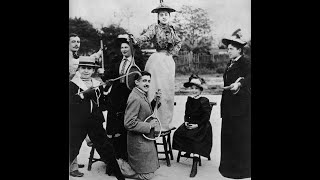
#9 Romantic irony and the Vinteuil sonata
How can a literary text convey what is heard in music, and what do Walt's dream in Jean-Paul and Vinteuil's little phrase in Proust reveal?
- 10
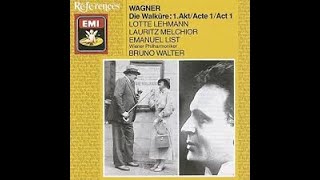
#10 The two Klemperers and Bruno Walter in Wagner
Why was the best German music, that of Wagner in particular, best conducted and expressed by Jews whom Germany drove out?
- 11

#11 Modal and tonal music
Why did tonal music, a recent exception on a musically modal planet, appear and develop so quickly in what is called the West?
- 12

#12 Nietzsche (right up) against Wagner
What does the conflict between Nietzsche and Wagner reveal, once we reread Nietzsche's texts while listening to the music?
- 13

#13 Mozart restored
What does Mozart's music say about happiness, and how does this happiness express the historical turning point of the late eighteenth century?
- 14

#14 Mozart once more
Why does Mozart's music, situated in the shift from the Ancien Régime to the new world, express that happiness which is, according to Saint-Just, a new idea in Europe?
- 15

#15 Plato, Rousseau, Hegel and music
What founds, since Plato, the complicity between music and philosophy?
- 16

#16 Programme music, pure music
Does the distinction between pure music and program music hold, and what does it reveal about modernity?
- 17

#17 Interpretation
What does it mean to interpret a musical work, between improvisation, execution and the restitution of the composer's thought?
- 18

#18 What is musical in music
What is musical in music?