Dominique Pagani presents Clouscard as his closest friend and the greatest Marxist thinker of the postwar period. He says he owes him, among other things, his knowledge of the French proletariat1. He takes from him the concept of the liberal-libertarian, coined as early as 1972, and the formula "everything is permitted but nothing is possible", permissive for the consumer and repressive for the producer2. In Le Capitalisme de la séduction, he highlights two things. First, the divide between those who consume more than they produce and those who produce more than they consume. Second, the distinction between capital goods and playful, libidinal and marginal consumption3. He takes up the idea of an "unconscious of the unconscious", made of class relations, and the effort to reconcile praxis and psyche4. He reads closely L'Être et le Code, where the code precedes being, as well as Les Chemins de la praxis and the Traité de l'amour fou, which he links to Tristan5. He sees worldliness as Clouscard's most distinctive concept6. He compares him with Rousseau and Socrates and stresses his solitude, owing to a lack of academic and political recognition.
Summary produced automatically from 150 of the passages below, to be reviewed; the numbers link to the moment in the session.
Who is this?
Michel Clouscard (French:; August 6, 1928 – February 21, 2009) was a French Marxist philosopher and sociologist. A critic of the evolution of ideas of progress confronted with the liberal mutations of the end of the 20th century, his work is linked to the thought of Rousseau, Hegel and Marx, whose links and unity he shows. He is known to have philosophically shown the collusion between capitalism and French theory, represented by Lévi-Strauss and Deleuze, constructing his own concept of neo-Kantianism. […]
1:48Neo-Fascism and the Ideology of DesireHe is the first to systematize the path that leads from Cohn-Bendit to Le Pen: "beneath the paving stones, Le Pen."
24:18He does not confine himself to the societal: he initiates the analysis of the process of consumption.
33:12He was a pleasure-seeker full of humor; he criticizes the ideology of desire while keeping the syntax of psychoanalysis, the repressed being class struggle.
53:01The Frivolous and the SeriousThe extortion of surplus value implies depriving the proletarian of consumption, an ethical foundation of his claim.
1:43:35Worldliness is Clouscard's own contribution, perhaps the most important category in his work.
8:52The Metamorphoses of Class StruggleThis short book summarizes his other works. His ontological solitude stems from the lack of recognition from his comrades.
13:23The Capitalism of SeductionIn the continuity of Hegel and Marx, he applies Marxism to consumption and mores, shows that class struggle is concealed, and reconciles praxis and psyche.
19:43Libertarian liberalism is a mutation of capitalism, which shifts from saving and effort to opening all the doors of desire.
51:21On May 68: "do whatever you want, but state it as such." Bourgeois sons are clubbed and workers are shot at.
1:07:24A former finalist in the 200 meters, he showed the young bourgeois Pagani that the Tour de France is the popular recognition of muscular effort.
11:20The Metamorphoses of Class StruggleShort work in theses, a summa taking up his eight previous books in a logic of the class struggle, from the Liberation to the present day.
16:41Being and CodeAn unclassifiable book, at once a history of a precapitalist mode of production and an essay on manners in the manner of the moralists.
17:57Critique of Libertarian LiberalismHis most properly philosophical work, in which he devotes dozens of pages to Rousseau, an immense dialectician.
26:07Mad LoveThe only Marxist philosopher to have written a treatise on mad love at the same time as a critique of libertarian liberalism.
1:27:54Progressive RefoundationThere he envisions a parliament of the collective worker, a third chamber that would counterbalance mere power relations.
0:00He fights the ideology of desire and not desire itself; he reproaches capital for a cut-rate offer.
4:31The Capitalism of SeductionThe theme of the ideology of desire bursts forth here for the first time; he contrasts liberal competitive capitalism with state monopoly capitalism.
10:15Mad LoveNo theorist has explored the infinity of desire as deeply as he does in this treatise centered on Tristan and Iseult.
16:22He was a great hedonist and feared more than anything being poorly served at a restaurant.
33:31The Frivolous and the SeriousThere is no such thing as a consumer society, but classes that consume; such a society would be realized communism.
1:37The Capitalism of SeductionHe dedicated this book to him. The chapter on the country house analyzes farmers' indebtedness and ecological neocolonialism.
4:27He always glorified the '68 of the workers and rose up against the liberal-libertarian '68, whose memory those in power would like to monopolize.
7:10Neo-Fascism and the Ideology of DesireAs early as the 1970s, he sees fascism returning through the liberal-libertarian left; at first he speaks of libertarian social democracy.
11:17He suffers from an ontological solitude, for lack of recognition by Marxists. His formula "everything is permitted, but nothing is possible" sums up the current crisis.
13:18If capitalism seeks to seduce, it is because there has been progress: it needs public opinion.
3:34Reply to Claude MorilhatHis reply to Morilhat accepts the formula "unavoidable but insufficient" and insists on questions of semantics.
9:49The Capitalism of SeductionPublished at Messidor by Richard Lagache; his largest print run.
12:32Reply to Claude MorilhatHe owns the metaphor of the "potlatch of surplus value"; his style summed up as "bulldozer contact."
17:50Reply to Claude MorilhatCentral formula: starting from ordinary ideological language to arrive at the necessity of the concept, that is Socrates' problem.
25:10He asserts that ordinary language is ideological as such, not occasionally.
0:24His youth and sport, the place where the work of the popular classes regains recognition.
5:00Neo-Fascism and the Ideology of DesireAs early as 1973, he denounces the collusion between unrestrained enjoyment and the liberal economy, which he traces back to the Marshall Plan.
19:03He coins the concept of liberal-libertarianism and sees in May 68 a counter-revolutionary reconquista.
33:13The Capitalism of SeductionAnthropology of gestures and rituals of integration into capitalism presented as emancipatory.
52:11He proposes a parliament of the collective worker in place of the Senate.
0:24The Capitalism of SeductionHe sums up the capitalism of seduction in the formula "everything's allowed, but nothing is possible".
4:30Neo-Fascism and the Ideology of DesireAs early as 1973, he denounces the collusion between the proponents of unrestrained enjoyment and those of liberal economics.
19:04In 1972 he coined the concept of libertarian liberalism and sees in May 68 a counter-revolution.
27:34Mad LoveHe holds together the critique of libertarian liberalism and love; he develops the concept of the neighborhood (quartier).
52:21He proposes replacing the Senate with a Parliament of the collective worker.
5:46Open Letter to the French CommunistsHe fraternally warns communists against a social-democratic drift and plays off this drift and the dogmatic temptation against each other.
18:34Alone with respect to an expectation: that of being recognized by his Marxist comrades; he accepts the judgment "indispensable and insufficient."
36:01He accepts working "with the axe" and takes the great authors as major signifiers of the phenomenology of the bourgeoisie.
1:06:05The potlatch of surplus value almost achieves the adequacy of image and concept and answers the Socratic problem of pedagogy.
1:38:41He distinguishes the State from the state apparatus, coins the syntagm of libertarian liberalism, and grants the State a republican dimension.
2:01Irreplaceable friend, presented as the greatest Marxist thinker of the postwar period.
11:10His isolation stems from a lack of recognition, especially within the Communist Party; his style is scorned out of class contempt.
20:36Reply to Claude MorilhatHe accepts the phrase "indispensable and unsatisfactory" as a dialectical positioning.
58:23Reply to Claude MorilhatAuthors only serve him as major signifiers of the bourgeoisie's phenomenology; he constructs the concept of neo-Kantianism.
1:23:59On Modernity, Rousseau or SartreHe answers the reproach of empiricism by recalling that between the Enlightenment and neo-Kantianism there is Hegel and Marx.
1:17He predicts the crisis analytically and forges the concept of liberal-libertarian: a regime repressive toward the producer, permissive toward the consumer.
11:14He relates the debate of ideas to the historical conjuncture and shows the shift from the capitalism of saving to permissive capitalism.
14:49Being and CodeHis master work follows the evolution of mores and the psyche from the Middle Ages to the Revolution.
28:53Being and CodeThe code, that is, the social relation of servitude and domination, precedes being and the relation to the outside world.
1:20:10The Capitalism of SeductionHe is the first to analyze musical consumption by relating meter to praxis.
1:51The Paths of PraxisAlone, at the beginning of the counter-revolution, he writes this book while fighting illness in order to make explicit the axioms of the Marxist model.
12:39The Paths of PraxisHe practices a transcendental irony; his rough-cast writing sits alongside poetic passages.
18:49The Frivolous and the SeriousThe worldly is the Clouscardian category par excellence, and it runs through his entire work.
25:52The Paths of PraxisHe makes Lévi-Strauss and Heidegger accomplices in a denial of praxis, then opposes Heidegger, a fascistic restoration, to Plato.
49:06The Paths of PraxisAccording to him, if the question of being appears, it is because it is already lost; his approach claims to be a contribution to Hegelian philosophy.
0:20Being and CodeOften-neglected work; there are three Clouscards: the sociologist and philosopher, the moralist, the Marxist historian.
11:03His effort comes down to the reconciliation of praxis and psyche, the order of feeling.
19:50He distinguishes two moments of capitalism; the Marshall Plan is a gift that buys souls.
36:49Neo-Fascism and the Ideology of DesireThose who claim to be to the left of the Communist Party are to the right of De Gaulle; Vichy takes its revenge.
47:58Written in total solitude, coming from a working-class background, he wanted "university professor" engraved on his tombstone.
0:28In contrast to the abstract universal, he stages political ideas in a concrete dramaturgy.
1:34Neo-Fascism and the Ideology of DesireReading of the 1998 afterword on May 68, the alliance of the liberal and the libertarian, and neofascism.
24:26Self-taught, he sees in the reduction of jazz to the binary beat a historico-social issue, not merely an aesthetic one.
45:18The Capitalism of SeductionThe chapter "The country house" reconciles the miserly bourgeois father and the prodigal son; a Molière and Marxist La Bruyère side.
50:03He does not denounce the small dealer but the illicit as the essence of capitalism.
3:30The Capitalism of SeductionThe publisher presents him as the thinker of the period running from 68 to the crisis, a Marxist with a novelist's eye.
12:21His thought is born of the scandal of the concealment of the workers' gains of 68; he calls the following years "the 40 shameful years."
16:26Critique of Libertarian LiberalismHe coined the concept of liberal-libertarian in 1972 and analyzes libidinal, ludic, and marginal consumption.
27:40Son of a miner from Carmaux and a schoolteacher, he was a supervisor at Saint-Gaudens and kept the accent of his home region.
29:58Critique of Libertarian LiberalismHe occupies Rousseau's position vis-à-vis intellectuals; original title of his book: On Modernity: Rousseau or Sartre.
0:19He coined the critical concept of liberal-libertarian: liberalism accommodates a pseudo-emancipation reduced to the fulfillment of the neo-petty bourgeoisie.
11:48The Capitalism of SeductionScene of the country house where the technocrat executive and his hippie son commune in the return to the land.
12:33Background: disadvantaged milieu linked to Carmaux, boarding-school supervisor, thesis L'Être et le code, professor at Poitiers, marginalized even within academic Marxism.
31:11Joinville anecdote: fare-dodger at 61, nothing of a cult of authority; his praise of the state is a provocation against pseudo-libertarians.
45:47The Capitalism of Seduction"Only what is recuperable gets recuperated"; the book, dedicated to Pagani, deals at length with music.
0:47By a mountain stream in the Balagne, he bursts out laughing while saying there are no vacations in the concept.
5:47The blackbird anecdote shows that he wrote every day, even on vacation, in good spirits.
11:33The Capitalism of SeductionReading of the passage on the country house, a stopping point for fashionable consumption and inverted reflection of rural migration.
57:16Neo-Fascism and the Ideology of DesireToday's neofascism comes from people wearing a democratic mask who say the West to avoid saying capitalist.
46:21Neo-Fascism and the Ideology of DesireAn accessible book, a hinge between early and late Clouscard, which foretells the return of fascism.
46:21Being and CodeA study of Ancien Régime France as a precapitalist whole, "a true detective novel."
48:15The Capitalism of SeductionHis most popular book, which models the mores of today; he distinguishes Clouscard the sociologist, philosopher, historian.
1:14:15Developed the historico-social unconscious, "the unconscious of the unconscious."
51:21According to his quip, the human sciences appeared at the end of the 19th century to lock down nascent Marxism.
2:16:39Friot criticizes a weak reading of the collective worker, which remains tied to the reproduction of labor power.
2:21:42Progressive RefoundationThe opposition between Vulcan and Narcissus sums up class struggle; the parliament of the collective worker is a dated proposal.
2:24:58Neo-Fascism and the Ideology of DesireThe only thinker to have seen neofascism in the ideology of desire and the "new struggles": "under the paving stones, Le Pen."
2:33:31He saw that today's fascism is rooted in the depths of society, not in the far right.
7:45Neo-Fascism and the Ideology of DesireThe extortion of surplus value implies the proletarian's deprivation of consumption; an inversion of Marcuse's thesis on libido and production.
9:36The only one to affirm that consumer society does not exist; he denounces the anti-consumerist discourse of the consumer.
15:16According to him, the human sciences were invented to lock down the diffusion of Marxism.
17:40Being and CodeCapitalism carries civil war among the poor; nature is posterior to history; he analyzes the passage from the leftist lightning to the fascist storm.
1:47Open Letter to the CommunistsAs early as 1976, he distinguishes the middle class from the middle strata and announces a neofascism arising from the collusion of liberals and the old right.
19:14He recounts his own remark, made orally: fascists were only ever afraid of the Red Army.
44:28Formula for libertarian liberalism: repressive at the social level, permissive at the societal level.
1:44:19The Capitalism of SeductionHis appropriation by the far right is a misreading: he takes sides on the societal and fights societalism, not rights.
2:04:51"If you find a consumer society, tell me where it is": what he sees around him are producers.
2:24His 1976 quip: those who cry fascism over trifles trivialize it; only the Red Army frightened liberals and leftists.
20:02The Frivolous and the SeriousCited among the texts where one finds the critique of anti-consumption discourse.
27:40Neo-Fascism and the Ideology of DesireDistinguishes equipment goods and consumption goods against Marcuse's confusion.
40:13Neo-Fascism and the Ideology of DesireReconstructs the hierarchy of subsistence, collective facilities, household equipment: historical conquests, not consumption.
59:24Mad LoveThe notion of the relational contains this treatise in embryo.
2:03Worldliness is his most distinctive concept, more important than the productive forces and relations of production, which are not his own.
6:01The Capitalism of SeductionFundraiser for the English translation of this book.
11:46The 1914 war liquidated millennia of peasantry that made us who we are.
58:50Being and CodeHe takes libido out of psychoanalytic confinement and shows the class struggle immanent to desire, with the miserly father and the prodigal son.
1:28:28He sees the link between the vogue for jeans and the connotation of wealth in the American dream.
26:02His concept of middle strata replaces the too broad notion of middle class.
29:36The Capitalism of SeductionThe chapter on the country house is a prose poem; the middle strata appear at the end of the 1960s.
43:54Being and CodeHe considers Kant's critical approach legitimate and denounces neo-Kantianism; he builds the concept of a philosophy of the French Revolution.
49:17Being and CodeThe transcendental subject degenerates into reactionary subjective idealism and reifies into class knowledge.
1:03:29Being and CodeLingers over the Paulette edict in an immense historical thriller from the Middle Ages to the Revolution.
1:21:10The one who best expressed the metamorphosis of manners, from daddy's capitalism to libertarian liberalism.
1:24:30The Capitalism of Seduction"The Country House" describes the synthesis of the new bourgeoisie: speculation, desertification, conviviality, reconciliation of father and son.
0:53A participant finds his posthumous book hard to read.
19:00First critic of libertarian liberalism, he was a bon vivant and not a puritan; not everything in existence is political.
23:24Mad LoveTitle that unites treatise and mad love; revolution of exogamous monogamy; Pagani chose the cover of the first edition.
25:01Neo-Fascism and the Ideology of DesireMasterpiece reissued by Delga, with his afterword 'Faut-il sauver le soldat Onfray?'
27:38The Capitalism of SeductionBook dedicated to him; Clouscard gives him the distinction between equipment goods and consumption goods; we do not consume enough.
2:19Center of the session, addressed through the audience's questions.
7:46Being and CodeHis major work, a fresco of the Ancien Régime from the early Middle Ages to the Revolution, in the wake of Lefebvre.
11:06The Capitalism of SeductionHis most widely read book, on transgression as promotional discourse.
1:40:31Rousseau is the only great predecessor in whom he recognized himself.
2:06:02Neo-Fascism and the Ideology of DesireAs early as 1972, he announces that neo-fascism will come from what presents itself as left-wing, not from traditional far-right extremism.
1:02Critique of Libertarian LiberalismThe only one to have developed the idea that Rousseau is a fabulous dialectician and the sole successor to his synthesis of praxis and psyche.
8:12The praxis-psyche opposition is his own terminology for infrastructure-superstructure.
51:40His quip: Kant saw everything but quickly drew the curtain; he distinguishes Kant from neo-Kantianism.
56:40Classifies Heidegger's ecologism under the category of neo-fascism.
34:55The Capitalism of SeductionSuffered until his death from the lack of recognition by his comrades; first recognized through the publication of his book.
42:12Published when the PCF drops below 15%; his most subversive idea is the distinction between the state and the state apparatus.
3:03Critique of Libertarian LiberalismInitial title "Rousseau or Sartre"; his position facing the intelligentsia is that of Rousseau facing the Enlightenment.
8:46Being and CodeHis thesis, perhaps his masterpiece, traces the history of the pre-capitalist process of production in France.
23:19A quip: the human sciences were invented to lock up nascent Marxism.
32:38Neo-Fascism and the Ideology of DesireHe called Deleuze and Foucault neo-fascists.
35:04"Capitalism will bring civil war to the poor."
10:17The Wild BeastThe Hegelian metaphor of the wild beast inspired one of his titles.
33:21Being and CodeDenies, following Hegel, any dialectic of nature.
37:30Neo-Fascism and the Ideology of DesirePresented as the greatest Marxist thinker of the postwar period, difficult to access, who anticipated as early as the 1970s the return of the far right in Europe.
1:00:43Open Letter to the French Communist PartyAs early as 1976, he distinguishes new middle strata from the traditional middle class, and announces a neofascism merging the privileged of liberalism and the vengeful old right.
1:18:49Among the references he favors without endorsing entirely.
5:13Mad LoveHis most unrecognized masterpiece, written toward the end of his life, in which this Marxist refers to the myth of Tristan; he asked him for Wagner's poem.
45:44In his response to a critic, he poses the problem of the passage from usual ideological language to the necessity of the concept, which he connects to Socrates.
59:26His expression "usual language" is preferred to "natural language."
32:28In a text pointing toward a new progressivism, he makes Alberich, mocked by the daughters of the Rhine, the figure of the proletariat come from the factory.
5:37He describes the civil war that capitalism induces among the poor.
9:53Being and CodePagani welcomes the request for commented readings of this difficult work and recalls his recent reading of Le Capitalisme de la séduction.
24:34The late Clouscard, perhaps the most orthodox of Marxists, insists on the importance of subjectivity, against Althusser.
54:05Pagani quotes him regarding the fear that the Red Army inspired in the Nazis.
21:47He identified as fashionable the tendency to "dismiss as outdated": the problem is no longer being progressive or conservative, but outdated or trendy.
25:14One of the characters in Riochet's essay about their circle of friends.
27:15The Paths of PraxisFor the tenth anniversary of his death, he composes a variation on his unfinished posthumous book: the Chemins subsahariens de la praxis.
1:24:47Reflected on the necessary simplicity of song lyrics.
1:34:24Critique of Libertarian LiberalismRomanticism as the split between noumenon and phenomenon; the hypothesis on absolute knowledge discussed with him.
1:03:30Author of the concept of liberal-libertarian: same standard of living, not the same way of life. He applies Marx to his own time instead of merely commenting on him.
1:24Progressive RefoundationHe proposes a parliament of the collective worker: this worker, united in production, is negated by the consumerism of libertarian liberalism.
1:18:24Being and CodeHe examines the light coercion of the social code, which almost precedes being.
28:02Being and CodeIf there is a consumer society, it is communism realized; he distinguishes those who consume more than they produce from the reverse.
1:49:39The Paths of PraxisA posthumous book, the most important of the postwar period according to him, written while battling Parkinson's; it points toward the paths of praxis.
4:32The Capitalism of SeductionAlcibiades' seduction is the object of his critique; the jeans on the cover illustrate the seduction of the attributes of the dominant.
7:42Speaks of exogamic monogamy, which inaugurates the amorous triangle.
1:30Critique of Libertarian LiberalismHis book, initially titled "On Modernity: Rousseau or Sartre?," was reissued under this title; he coined the phrase "libertarian liberalism."
7:59Cited alongside Rousseau and Marx as a standpoint that has nothing puritan about it.
5:00Mad LoveAn unrecognized masterpiece from the end of his life, in which this Marxist refers to the myth of Tristan and marvels at the anthropological relevance of Wagner's text.
4:09The Capitalism of SeductionA decisive meeting; Clouscard dedicated this book to him, but he owes him much more, notably his knowledge of the French proletariat.
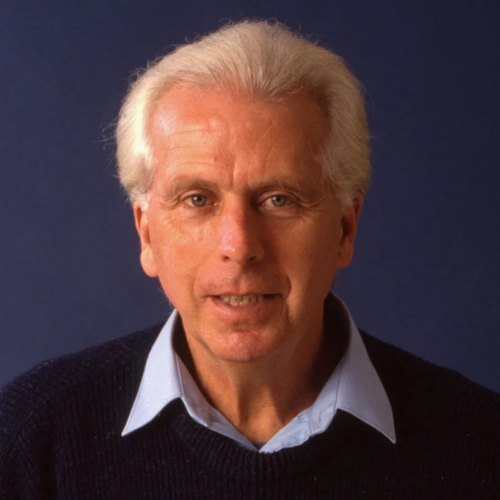
 Talks · 23 May 2026NEO-FASCISM AND THE IDEOLOGY OF DESIRE: Is Michel CLOUSCARD still relevant? - with Dominique PAGANI