Femininity and Community
A cycle devoted to explaining and developing Dominique Pagani’s book Féminité et communauté chez Hegel (Delga), on “the relation of aesthetics to politics in the System”; then, from January to July 2022: philosophising under threat, Ukraine, from Kafka to Proust, caves of yesterday and today, Nietzsche, Clouscard.
- 01

Presentation of the 2021/2022 workshops - Association membership
What is the program of the philosophy workshops for the 2021-2022 season?
- 02

10#1 The eternal irony of the community
What does Hegel's formula "this femininity, eternal irony of the community" mean, and why is the tension between family and city it designates still relevant today?
- 03

10#2 Dialectics of identity and difference
What relation, and what hierarchy, does Hegel establish between aesthetics and politics, based on the opposition between the family and the city embodied by Antigone?
- 04

10#3 Freeze-frame, or the primal scene
- 05

10#4 From Lascaux to modern music, the permanence of the political stakes in aesthetics
Why does aesthetics remain tied to a political stake in Hegel, and why does the tragedy of Antigone still hold for the modern world?
- 06

10#5 The figure of Antigone, such as into herself at last...
Why does Hegel make Antigone's tragedy the "supreme ethical opposition," to the point of granting it a value that escapes its own era?
- 07

10#6 War and Peace: "The death drives advance in silence..." (Freud)
Why is the danger of war, from the Sahel to the Russian-Ukrainian border, wrapped in silence, and what does this silence reveal, in the sense that "the death drives progress in silence"?
- 08
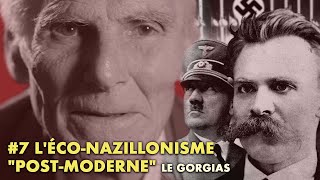
10#7 "Post-modern" eco-petty-Nazism - Plato's Gorgias
Why does "post-modern" thought, which claims descent from Nietzsche, deify nature and despise equality merely repeat the thesis of Callicles in Plato's Gorgias?
- 09

#8 Philosophising under threat
What does the geopolitical situation in eastern Europe and the Sahel reveal about the crisis of capitalism and the danger of war?
- 10
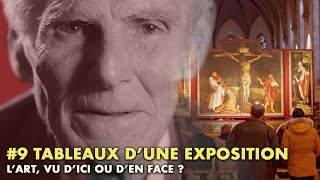
#9 PICTURES AT AN EXHIBITION: Art, seen from here or from the other side?
How does art pass, in Hegel's aesthetics, from the presence of the sacred to representation, and what relation does this movement of interiorization bear to the political?
- 11

#10 UKRAINE: From the problem of "Edges" to the unleashing of war
What does the notion of edge, border and march teach us about the war that breaks out in Ukraine?
- 12

#11 UKRAINE: Mathematics unites men, politics divides them (Aristotle)
How should one respond to those who accuse Dominique Pagani of anti-Americanism and complacency toward Putin, and what does the media unanimism on the war in Ukraine reveal?
- 13

#12 From Kafka to Proust, the dialectical passage from the intermezzo to the perpetuated edge
How can we think the dialectic between the security of the hinterland and the peril of the edge, and what does it mean to stand on a "perpetuated edge"?
- 14

#14 Caves of Yesterday and Today - From Plato to modernity
What remains invariant, beneath their apparent discontinuity, in Dominique Pagani's talks?
- 15

#15 Nietzsche: Philosophical or musical relevance? Answers to questions
What place does music occupy between the mathematician, the poet and the philosopher, and what good use can be made of Nietzsche, the philosopher who spoke most of music?
- 16
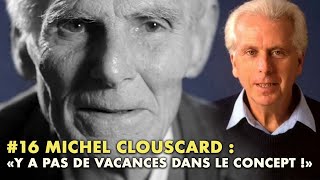
#16 Michel Clouscard: "There are no holidays in the concept!" - Dominique Pagani
What does Clouscard's quip "there are no vacations in the concept" mean, and how does philosophy make problematic habitual concepts such as "climate disruption" or "the West"?