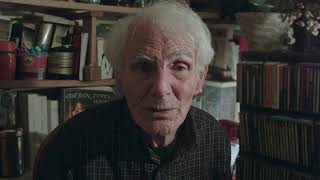
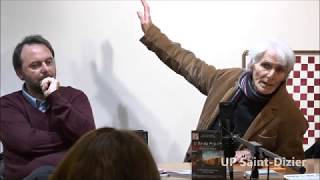
Dominique Pagani presents Hegel as the philosopher he identifies with most: the thinker of negativity, without which there would be no dialectic1. He reads the Phenomenology of Spirit closely: the preface and the power of the negative, recognition, the chapter "Lordship and Bondage"2. From the Elements of the Philosophy of Right, he retains that the real is rational, the owl of Minerva and the reading of Plato's Republic3. He stresses the Jena texts, where the tool becomes the middle term and a power of spirit, in a text unknown to Marx4. He also comments on the analysis of the Terror as the reign of formalism and on the Aesthetics (Antigone, Dutch painting). Refusing to decouple Marx from Hegel5, he places Hegel as the mediation between Rousseau and Lenin, grants him a revolutionary side and a reactionary side, and notes the two thinkers' disagreement on the end of history6. Against Adorno, he defends the dramatic character of the synthesis.
Summary produced automatically from 150 of the passages below, to be reviewed; the numbers link to the moment in the session.
Who is this?
Georg Wilhelm Friedrich Hegel (27 August 1770 – 14 November 1831) was a German philosopher and a major figure in the tradition of German idealism. His influence on Western philosophy extends across a wide range of topics—from metaphysical issues in epistemology and ontology, to political philosophy, to philosophy of art and philosophy of religion. […]
9:04Reason in HistoryHis cunning of reason justifies Napoleon's place; reason leads to freedom but lacks existence.
18:19Finishes his major work at Jena in 1807 as Napoleon enters the city and salutes the man on horseback who dominates the world.
50:43Elements of the Philosophy of RightSections 5 to 7: freedom of emptiness, determined freedom, and individuality as the particular raised to the universal.
1:14:13The Orientals knew that one is free, the Greeks that some are free, the moderns know that all are free.
1:25:48On the English Reform BillHis last text denounces private interest and corruption in English political life.
5:37Elements of the Philosophy of RightHis political testament, a Berlin course divided into paragraphs, elliptical, in which the old Hegel no longer re-explains what he has already demonstrated.
10:36Elements of the Philosophy of RightReading of paragraph 6: conceiving immanent negativity in the universal or in the self was the progress that speculative philosophy had to make.
38:40Phenomenology of SpiritThere are poetic passages in Hegel: the young girl with fruits, the night of the world one sees in a man's eyes.
44:46The Difference Between Fichte's and Schelling's System of PhilosophyA representative of absolute idealism, he sets Fichte and Schelling back to back while asking to be buried next to Fichte.
1:21:56Elements of the Philosophy of RightReading of paragraph 5: the pure indetermination of the will is only negative freedom, which becomes fury of destruction.
14:22Phenomenology of SpiritDidactic work that raises common consciousness to philosophical consciousness; it is the vestibule of the Greater Logic.
16:46Science of LogicHis system is a circle of circles: logic, nature, spirit; the Greater Logic is its first circle.
22:17Compares the appearance of man in nature to the speculative Good Friday, followed by the resurrection of spirit; a comparison drawn from his theological training.
26:43Science of LogicWatched by censors, he remains cautious about God, but comes closest to him with the absolute idea.
39:51Phenomenology of SpiritAccording to legend, he finishes the work in 1807 in Jena just as Napoleon's troops enter: history knocks at the philosopher's door.
42:34Elements of the Philosophy of RightIn the note to §258, refutes von Haller: no need to put two thoughts together where there is not even one.
58:35Elements of the Philosophy of RightPreface: Plato wanted to curb free infinite personality; what is rational is real.
1:03:37Elements of the Philosophy of Right§185 and §187: against the innocence of the state of nature and particular enjoyment, spirit forms itself by working on exteriority.
1:36:52Elements of the Philosophy of Right§7: the individual is the particular attuned to the universal; the infinite as negativity relating to itself.
2:09:15Philosophy of Spirit (Jena, 1803-1804)Money as an existing material concept; the system of needs, a wild animal to be tamed; the tool at the basis of spirit.
2:43The figure of Antigone runs through his whole life as an author, from the translation made in secondary school.
18:51AestheticsHe makes the opposition between the state and the family the purest matter of tragic presentation.
34:51Elements of the Philosophy of RightAntigone's piety is there the law of woman, and her opposition to the law of the state is the supreme ethical opposition.
57:57Phenomenology of SpiritWar prevents the community from dissolving into clans; duty toward the dead wrests death from nature.
1:52:59Elements of the Philosophy of RightHe dismisses equally primitive innocence and sensuality, both of which make culture something external.
15:58Elements of the Philosophy of RightHis preface criticizes the illusion of an ever-renewed "now" in which everything would need to start over.
18:40Phenomenology of SpiritHe is twenty years old at the fall of the Bastille and admires the French revolutionaries: the Germans think what the French do.
19:57Phenomenology of SpiritSpirit breaks with the old world and works at its own transformation; it is never at rest.
23:39Phenomenology of SpiritThe image of birth illustrates the qualitative leap that interrupts quantitative growth.
30:23Phenomenology of SpiritFrivolity and boredom announce the new world, which the rising sun draws all at once.
5:51AestheticsAuthor, after Kant, of the most monumental aesthetics and of the first systematic aesthetics of modern times.
19:08Elements of the Philosophy of RightHe makes Antigone the "supreme ethical opposition" and the most perfect work, which derogates from his refusal of timeless values.
46:03Phenomenology of SpiritThe preface rehabilitates the understanding, absolute power of the negative, and marks his break with his youthful romanticism.
1:19:07AestheticsHe divides art into symbolic, classical, and romantic according to the relation of content to form.
1:38:08AestheticsArt never ceases to progress, but it has lost the possibility of representing the absolute.
36:03First Philosophy of SpiritA text from 1805 on the division of labor, so close to Marx that they are confused, although Marx never knew it.
40:14First Philosophy of SpiritDefines money as the existing material concept and possibility of all things needed, a general form that leaves desire undetermined.
1:22:30Elements of the Philosophy of RightConceiving negativity as immanent within the self is the progress of speculative philosophy, which the understanding refuses to penetrate.
1:29:59Phenomenology of SpiritThe preface rehabilitates the understanding as the absolute power of the negative and breaks with Romanticism: beauty without strength hates the understanding.
1:44:45AestheticsAnswers on Africa: the pamphlet for Victor Cousin ends on the enchanters of Africa, and natural religion figures the absolute first.
11:13Phenomenology of SpiritHis preface asks that the true be apprehended not merely as substance but also as subject; a rare affirmation of "the essential."
27:24He favors the oriented movement from substance to subject; he does not like the aphorism but the labor of the negative.
59:55Phenomenology of SpiritAgainst romanticism, truth exists only in the concept; the modern spirit has lost its substance and demands a restoration.
1:27:56AestheticsThe sphinx is the symbol of the symbol, a mystery even for the Egyptians themselves.
1:38:04Elements of the Philosophy of RightTo be modern is to introduce the split within the subject itself (paragraph 8).
17:45Phenomenology of SpiritDistinguishes the external finality banished by mechanism and reason as an operation conforming to a purpose; the unmoved mover is subject.
40:59Elements of the Philosophy of RightThe abstract will is negative freedom, the freedom of the void, which becomes fanaticism and fury of destruction.
51:49Philosophy of Spirit (Jena)The name suppresses the thing and becomes its true being; man is this night, this empty nothing that contains everything.
1:08:11Philosophy of Spirit (Jena)Money is the general, hence indeterminate, form of desire.
1:15:37Phenomenology of SpiritThe life of spirit without seriousness, pain and the work of the negative falls into dullness; reason as the rose in the cross of the present.
4:07Middle position in the sequence from Rousseau to Lenin; known as the philosopher of Vermittlung, mediation.
11:19Elements of the Philosophy of RightReads Plato's Republic as an expression of Greek ethos and pivot of world revolution; formulates 'the rational is real.'
27:43In an 1807 letter, praises the French Revolution for stripping the individual of the fear of death and fluidifying human relations.
50:25First Philosophy of SpiritPosits memory, language and the tool as mediations of spirit; the tool is the middle term in which labor has its permanence.
1:16:37Phenomenology of SpiritThe preface describes a time of gestation and transition in which spirit is born in a qualitative leap.
1:11Treated as a "dead dog" for forty years, he returns with the crisis, at the same time as Marx.
42:18Phenomenology of SpiritThe slave's anguish before death, the absolute master, shakes the whole of his essence.
54:33Reason in HistoryOne free, some free, all free: access to man in general requires the patience of the concept.
1:17:03Elements of the Philosophy of RightModern subjective freedom dissolves patriarchal states; the family is already in dissolution within the program of modernity.
2:08:42His relation to romanticism is an Aufhebung: he sublates it, having himself once been absolute romanticism.
26:06Since Hegel, nothing has been said; in him praxis is carried by desire, not by need.
51:29Letter to ZellmannThrough the Revolution, the French nation stripped itself of the fear of death; in him freedom is inseparable from the assumption of death.
1:08:24He reproaches the Terror for preventing the negative from turning against itself; he keeps the enthusiasm of his youth for the Revolution.
1:40:55Elements of the Philosophy of RightHe dismisses both the innocence of the state of nature and enjoyment, which both regard culture as external.
1:52:18In him identity is primary and differentiates itself into totality; totalization is the actualization of a totality that is at first massive.
5:23thinker of totality, whose thought is nonetheless hunted down at the university by Nazi power
14:01the sleeping spirit of nature has nightmares, catastrophes; human history must integrate the return of the history of nature
18:26the end of history is not the end of events; along with Marx, he is one of only two to have thought dialectically
22:14Elements of the Philosophy of Righthe welcomes civil society but sees the grip of the economy on the political, hence the state that must sublate it
25:09Elements of the Philosophy of Rightparagraph 185 is read as an anti-totalitarian text; in the preface to the Phenomenology of Spirit, the individual remains the absolute form
2:38Lectures on the Philosophy of HistoryHis lectures set out a philosophical history rather than a philosophy of history; cunning and Providence are its mainsprings.
6:43Elements of the Philosophy of RightDisgusted by the nobility, he prefers the bourgeoisie while still contesting bourgeois values.
9:27A speaker at the revolutionary club of the Tübingen Stift, he writes pamphlets and practices concealment for fear of censorship.
21:54Presented as the philosopher of the French Revolution, in contrast to the image of the official philosopher of the Prussian state.
29:19Lectures on the Philosophy of HistoryAt the end of his life, he praises the French Revolution as a "magnificent sunrise."
14:25It is he who thinks the dichotomy of modernity. The subject is not a given, and desire is destructive.
21:06He speaks of acosmism regarding Spinoza: every philosopher has two philosophies, his own and Spinoza's.
58:38AestheticsDutch painting shows trivial objects conquered by a prodigious collective labor, which foreshadows Marx.
1:24:27Nothing resists the master, whose desire passes through the slave's labor. The dialectic of desire shows an abstract subject that negates the object.
1:32:24Elements of the Philosophy of RightThe freedom of emptiness, pure indeterminacy of the self, becomes in action a fanaticism and a fury of destruction.
12:58Phenomenology of SpiritReading of the passage on the end of the religion of art: the works are beautiful fruits offered by a girl, more than nature.
47:29AestheticsHierarchy of the arts, from architecture to poetry: painting abstracts depth, music all spatiality.
1:23:50Phenomenology of SpiritSelf-consciousness for a self-consciousness: a me that is a we, and the spiritual day of presence.
1:45:46Phenomenology of SpiritSense-certainty: the now shown is a past; the here aimed at is the point, a non-being.
2:02:26Elements of the Philosophy of RightThe idea is the realized concept; the concept that is only the concept is not the concept.
5:51Elements of the Philosophy of RightReading of the paragraphs on the will: abstract self, character, then individuality as negation of the negation.
32:35Jena Philosophy of SpiritIn the 1805 text on the three powers, the tool is the existing rational middle term.
46:02Phenomenology of SpiritCommentary on 'Lordship and Bondage': recognition, struggle to the death, absolute master, the slave's formation through fear and labor.
2:00:18AestheticsArchitecture of the system and three forms of art: symbolic, classical, romantic.
2:31:48Making freedom the meaning of history lifts the aporia between a totalitarian meaning and the absurd.
8:06His youthful aphorism makes the present time the limit of thought; to be in error is to remain in the past.
25:43Phenomenology of SpiritSelf-consciousness is desire: it gives itself certainty of itself only by suppressing the other.
29:24Elements of the Philosophy of RightThe will that abstracts itself from all determination is the freedom of the void; turned toward action, it becomes a fury of destruction.
1:23:17Phenomenology of SpiritIn Antigone, femininity and masculinity oppose each other as family and city; Antigone and Creon are both one-sided.
2:03:14Phenomenology of SpiritDistinguishes what is for consciousness from what is for us, who retain the memory of the stages.
2:51Phenomenology of SpiritA fascinating work, between philosophical treatise and novel of formation, which seeks to raise common consciousness to philosophical consciousness.
11:10Phenomenology of SpiritFundamental proposition of the Preface: the result is nothing without its becoming.
17:21In the letter to Windischmann, he recalls his Frankfurt crisis and the "nocturnal point of contradiction."
1:16:36Phenomenology of SpiritRehabilitates the understanding as absolute power of the negative against the Romantics' beauty without force.
2:07:43Phenomenology of SpiritDescribes his time as gestation: the slow evolution leads to revolution as a qualitative leap.
4:20He translates Antigone at 14 at the Stuttgart gymnasium, then spends whole evenings discussing it at the Stift with Schelling and Hölderlin.
5:16AestheticsHe judges Antigone the most perfect and most peaceful of all ancient and modern masterpieces.
5:53Elements of the Philosophy of RightHe sees in it the supreme ethical opposition, valid in every place and time, by way of exception to his own historicization of art.
7:12In the ancient city, the individual is an ineffective shadow.
9:25A philosopher of the state, he is fascinated by the one who defends the private; the dead belong to the family.
5:20First Philosophy of SpiritA 1805 text written in Jena, where the description of the pin factory and of dead labor seems to come from Marx.
10:41First Philosophy of SpiritMoney is there defined as existing material concept and possibility of all things of need; civil society is a wild beast to be tamed.
27:14First Philosophy of SpiritRereading of the passage on the system of reciprocal dependence that moves blindly and elementarily.
32:42The straining effort of the concept (Anstrengung des Begriffs).
35:02Falsely presented as the official philosopher of the Prussian monarchy; he was watched by the police for his French ideas.
2:35Phenomenology of SpiritA concept proper to Hegel, the cunning of reason; the Jena texts precede the Phenomenology, said by legend to have been completed as Napoleon entered the city.
11:50Science of LogicIn the preface, language is what must least be forgotten in logic.
35:25Reason is cunning because it lacks existence; it is freedom, the meaning of history, from one free man to all being free.
54:12Philosophy of Spirit (1805)Man is "this night" that preserves images in the unconscious treasury of spirit; to look a man in the eyes is to see the night of the world.
1:19:45Philosophy of Spirit (1803-1804)The instrument is the existing and rational middle term, that in which labor has its permanence; labor is a restrained annihilation.
8:01Born in 1770; sees the stake of the Napoleonic moment beyond the person.
43:02AestheticsOrders the arts from architecture to poetry, the summit which joins the daylight of the concept to music.
1:13:39Elements of the Philosophy of RightAlways relates the work to its historical content, but makes Antigone an exception: the supreme ethical opposition.
1:25:13Phenomenology of SpiritThe government must shake private individuals through war to make them feel their master, death.
1:36:51First Philosophy of Spirit (Jena)Money is the existing material concept; the economy, a wild beast, must be tamed by the state.
13:33Jena Philosophy of SpiritFor the first time, a philosopher inscribes the tool, the most prosaic of things, among the powers of spirit.
19:01Jena Philosophy of SpiritThe tool is the existing and rational middle term, in which labor has its permanence; spirit requires a long material process.
23:45Elements of the Philosophy of RightHis political testament states that the true is always concrete.
24:05Jena Philosophy of SpiritDescribes in 1803 the pin manufacture, the division of labor, and the dulling of the worker, sketching the theory of value.
27:04Jena Philosophy of SpiritTraces the genesis of money as a material concept and compares civil society to a wild beast that must be tamed with severity.
12:28AestheticsHumor and irony are the last stage of each aesthetic cycle, and Aristophanes' laughter crowns dramatic poetry.
46:22Elements of the Philosophy of RightThe property of the idea is to externalize itself: the concept that is only the concept is not the concept.
49:21Part of his obscurity would come from the need to outwit censorship.
50:38CorrespondenceLetter to Schelling of 1795: peoples will regain their rights, and religion has served despotism by teaching contempt for the human species.
1:23:30The idea that externalizes itself is compared to the inner world that needs the exterior in Proust.
8:21Phenomenology of SpiritThe last chapter leads to absolute knowledge; this unusual book takes on the appearance of a novel of formation.
32:29Destructive desire wants to affirm the subject against the object, but it is the object that keeps reappearing.
37:19Elements of the Philosophy of RightNegative freedom, the freedom of the void, has the feeling of its existence only by destroying, and becomes a fury of destruction.
1:09:13The "everything is nothing" of the Nights corresponds to what he calls pure negativity.
1:21:21Spirit conquers its truth only by finding itself in absolute tearing apart.
5:58Phenomenology of SpiritSelf-consciousness is in and for itself only insofar as it is recognized by another self-consciousness.
1:08:24The pair Herr und Knecht inspires his dialectic of master and slave.
1:10:24Nothing is more opposed to Hegel than the law of blood; his model of freedom is Rousseau.
1:13:05The Spirit of Christianity and Its FateThe Orient is a historical metaphor; the Germanic world is not racial; he discovers only late the Jewish and Christian depth of the negative.
15:17In him, the historical process, the odyssey of the spirit, is itself the subject.
24:03In him the substantial takes on the meaning of a relation to the world that personifies what is in fact governed by inertia.
53:41Elements of the Philosophy of RightThe will that abstracts itself from all determination is only negative freedom, the freedom of the understanding.
1:16:10Elements of the Philosophy of RightThe freedom of the void becomes contemplation or fanaticism for the destruction of all order, mere fury of destruction.
1:33:42Elements of the Philosophy of Right"The rational is actual": pivotal to the world revolution produced by Plato; Wirklichkeit presupposes work.
2:10Truth is the whole: there is no good beginning.
33:28Modernity begins with Christianity; Oedipus's answer to the sphinx resolves the riddles of antiquity; it takes two thousand years for the Bastille to realize Christianity.
41:07In the cunning of reason, truth, which is weak, makes use of Napoleon to create the modern state.
45:46Lectures on the Philosophy of HistoryOne is free, then a few, then all: history's meaning is freedom.
1:14:48In a letter of 1807, he writes that the French Revolution delivered men from the fear of death.
0:00Lectures on the Philosophy of HistoryThe French have their head close to their cap: they do what the Germans think and pass to the political order.
13:09Antisymmetry between the law of falling in nature and that which stands erect in the order of freedom.
1:16:22Negativity, a fundamental Hegelian concept, makes it possible to return to monism and to escape Kantian dualism.
0:34Phenomenology of SpiritAn already scientific introduction to science, running from sense-certainty to religious mysteries: the most difficult text there is.
17:18Phenomenology of SpiritJustifies the end of history in a rational national state which gathers together the objective conditions of freedom.
22:41Phenomenology of SpiritA philosophy of the true and of a concrete logic that welcomes the manifold and the contradictory, not a philosophy of sense.
58:21Phenomenology of SpiritA mediating and pedagogical work: to bring philosophy down to common consciousness and raise the latter to philosophy.
1:40:58Elements of the Philosophy of RightThe preface notes that those who criticize the state draw their subsistence from the state.
3:32Lectures on the History of PhilosophyLectures more accessible than his works; the preface, written under the Restoration, invites a return to pure thought.
10:01Phenomenology of SpiritThe activity of dividing is the absolute power of understanding; the here that is meant is the point, but it is not.
48:15With the French Revolution, humanity walks on its head: ideas govern the world.
1:32:57Phenomenology of SpiritSelf-consciousness exists only for another self-consciousness, that is, insofar as it is recognized.
1:41:04The Orientals know that only one is free, the Greeks that some are, the moderns that all are: freedom is the meaning of history.
2:00The philosopher he claims kinship with the most without being Hegelian, because he is the philosopher of negativity.
7:50AestheticsThe child making ripples in the water prefigures the artist: he recognizes in reality the echo of his own action.
8:31Phenomenology of SpiritThe slave who shapes the world has a less hopeless relation to the world than the master, who never finds in it the image of his desire.
9:32Every philosopher has two philosophies, his own and Spinoza's.
11:26An early text sees negativity in the human gaze: the night of being that advances to meet each person.
27:48The liberation theologians settle the question of God in a Hegelian manner.
43:33Elements of the Philosophy of RightThe will that abstracts itself from all determination is negative freedom or the freedom of the void, a freedom of the understanding and not of reason.
50:52Elements of the Philosophy of RightTurned toward action, this freedom becomes a fanaticism of the destruction of all social order and the annihilation of all organization.
56:02Elements of the Philosophy of RightThis will believes it wants universal equality but refuses all positive reality; its realization is only a fury of destruction.
16:31Elements of the Philosophy of RightRecognized determination (anerkannt) is the Hegelian term par excellence.
19:58Elements of the Philosophy of RightReading of the passage on the freedom of the void, which becomes a fury of destruction when it turns to action.
26:02Elements of the Philosophy of RightThe refusal of all determination is itself determined; one must conceive the negativity immanent to the self.
1:09:16He ironizes about Plato's prescriptions to nursemaids.
1:11:53Elements of the Philosophy of RightThe preface sees in the Republic the Greek ethical life and in Plato's method the pivot of the revolution; the owl of Minerva.
8:40Lectures on AestheticsOf all masterpieces, Antigone seems to him the most perfect: family and state are opposed in it.
38:10Elements of the Philosophy of RightHe translated Antigone at 15 and returns to it up to the Philosophy of Right, as a sublime illustration of the family-state opposition.
59:25The objective morality of the ancients seems barbaric to us; it is less developed than ours, but more courageous.
14:58Phenomenology of SpiritThe preface assigns to modernity the task of bringing philosophy closer to science: this is a program, not a science in actuality.
18:24Phenomenology of SpiritThe Phenomenology compared to a novel of formation.
49:46His mystical expressions were mainly meant to evade the censorship of the ministry of cults.
56:33Phenomenology of SpiritTruth has the concept as its element; he criticizes the modern spirit that asks philosophy to restore lost substantiality.
1:29:40Phenomenology of SpiritIn representation, the flow of time takes the solid, compact form of space.
11:43CorrespondenceIn his letter to Schelling, he celebrates the dignity of man and denounces religion allied with despotism, which teaches contempt for the human species.
19:58Money is the general form of need: it allows one to satisfy every need and to ignore oneself.
49:56Philosophy of Spirit (1805)Primitive consciousness preserves its images in the night of spirit; man is this night, discovered by looking him in the eyes.
1:02:52Philosophy of Spirit (1805)Edition reference: Épiméthée collection, PUF, very first page.
12:38Phenomenology of SpiritHistory of the alienations of consciousness, which culminates in absolute knowledge; he explains the Aufhebung, which suppresses and preserves at once.
21:28For Hegel, the property of the Idea is to manifest and externalize itself.
22:51"The pure porosity of matter": a formula made entirely of everyday words.
28:17Phenomenology of SpiritAbsolute knowledge is not a knowledge of everything; Hegel ignores the "indifferent difference."
53:58His most synthetic sentence: the Orientals knew that one is free, the Greeks that some are, the moderns that all are.
4:31Observes that the French are quick-tempered, unlike the Germans.
14:57For him a great event requires heroes, great men.
27:11Elements of the Philosophy of RightHis model: liberal then solidary civil society, nation-state, freedom first; "you read Hegel, it's all there."
1:03:54Elements of the Philosophy of RightParagraph 185: the patriarchal states succumb to the infinite reflection that produces freedom.
1:38:31Elements of the Philosophy of RightAlready in 1820 criticizes the pedagogy of play which presents children as complete and disturbs their desire to grow up.
12:13He mediates the sequence; on the agrégation syllabus, he also has a reactionary side, but an irrefragably revolutionary part.
14:42For him, absolute knowledge is the end of history, which Marx conceives as the end of prehistory.
15:42Phenomenology of SpiritConsciousness reaches absolute knowledge when its content is the spirit of a people; the preface recalls that eidos designates both species and idea.
10:36With Kant, he is the author of the great philosophies of liberty of the revolutionary era.
16:42Science of LogicHe distinguishes three levels of being; intersubjectivity and reciprocity belong to essence.
37:44He had said that the nation-state would be the definitive reality.
53:39Phenomenology of SpiritA participant recalls that the last two lines of the Phenomenology quote a hymn by Schiller.
1:15:08Science of LogicInteraction culminates in the logic of essence, whereas the concept presupposes a prior totality; Marx, like him, situates himself at the level of concept.
0:32Reference for the importance of knowing the historical present.
1:30What he calls the end of history is for Marx the end of human prehistory: the only important difference between them.
5:23AestheticsHe subsumed aesthetics into the political: the truth of aesthetics is the political.
11:11Phenomenology of SpiritFemininity, "the eternal irony of the community."
13:12Elements of the Philosophy of RightIndividuality is the particular reflected on itself and thereby raised to universality, not the opposite of the universal.
19:27The Spirit of Christianity and Its FateHis study on the spirit of Judaism begins with Abraham grazing his flocks on a boundless land.
1:06:41Possibility is not reality: reference to being-in-itself and being-for-itself.
1:12:33Lectures on the Philosophy of HistoryHistory has a meaning, freedom: the Orientals know that only one is free, the Greeks that some are, the moderns that all are.
1:21:23He dismisses both meaninglessness and totalitarian meaning, since this meaning tends toward as many free individuals as possible.
1:24:47Christianity's historical function is to have abolished slavery.
1:36Elements of the Philosophy of Right"You shall never be more than your time": each is a son of his time in philosophy, the historical present is the horizon of thought.
37:36Phenomenology of SpiritThe chapter on the ethical world: in the city, this particular individual is an ineffective shadow, he counts only as a citizen.
1:20:41Elements of the Philosophy of RightThe individual is the particular reflected upon itself and thereby raised to universality.
1:26:43"The real is rational": ancient societies had their reasons.
15:25The metaphor of the plant: all philosophies express the absolute.
23:50He calls himself Hegelian in his very approach; Hegel is Platonist, Spinozist, and says that Plato inaugurated the world revolution.
1:02:51AestheticsThe Aesthetics summarizes the system: from the Egyptian god to the Greek statue then to the suffering Christ, a progression of freedom.
1:30:47Lectures on the Philosophy of HistoryThe Orientals only know that one man is free.
1:42:57The first to understand that freedom is already realized; he asks that we stop speaking in terms of duty, against the Kantian Sollen.
2:26Science of LogicThe chapter on the absolute idea, read by Lenin, shows the reciprocal engendering of spirit and matter.
12:42Jena Philosophy of SpiritMakes the tool a power of spirit and the existing rational middle term between the worker and the object, before Marx.
27:51Death is the being-there of nature become immediate.
32:52According to a text read by Dominique Pagani, consciousness determines its relation to the object according to the degree reached by the spirit of the world. He sees in it a Marxist manifesto.
34:21Only the stone is innocent: as soon as one acts, one is implicated.
3:15Subject of his book Féminité et communauté chez Hegel.
13:23One cannot bypass Hegel; Clouscard situates himself in the continuity of Hegel and Marx.
34:53Philosophy of Spirit (Jena, 1803-1804)Civil society, bürgerliche Gesellschaft, is a "wild beast" to be tamed: pages on the pin factory that could pass for Marx's.
1:11:57Elements of the Philosophy of RightMinerva's owl takes flight at dusk: Clouscard must be read now that his world is declining.
4:07Phenomenology of SpiritIn the passage of the girl and the fruits, the statues are no more than stones whose soul has fled.
48:40Encyclopedia of the Philosophical SciencesHis explanation of the Fall: spirit emerges from innocence through self-knowledge, and restoration is found in thought alone.
1:17:49Elements of the Philosophy of RightConceiving reason as the rose in the cross of the present, a likely allusion to the Rosicrucians.
1:28:02He harshly criticized Kant; the young men of Tübingen saw Kant as the Moses of the nation.
1:18:30In Gracq, he is the prince of philosophers; his dialectic is the lever of Archimedes that would lift the world.
1:59:24Encyclopedia of the Philosophical SciencesThe fall: knowledge divides spirit from the natural, and it alone can suppress the misfortunes it brings.
21:29Phenomenology of SpiritAgainst his abstract image, the preface affirms that beauty without strength hates understanding and that the life of spirit sustains itself in death.
33:51Phenomenology of SpiritSpirit looks the negative in the face and dwells with it; this dwelling converts the negative into being.
37:36Spirit, that is, history, is always elsewhere than itself.
40:44Like Marx, he is reluctant to separate method from content.
19:29Lectures on the Philosophy of HistoryHe concentrates the meaning of history in freedom: one alone is free among the Orientals, a few among the Greeks, all among the moderns.
2:04:21He makes frequent use of the term alienation.
2:13:12Marx borrows from him dialectic for the form and history for the content.
1:39:19Lectures on the Philosophy of ReligionThe summit of Hegelianism: discussing the proofs of God's existence, he clarifies how the dialectic works; a late text, more accessible.
1:44:13Elements of the Philosophy of RightNegative freedom, a flight from any determination, becomes in action a fanaticism of destruction: a prescience of the Khmer carnage.
2:05:01Elements of the Philosophy of RightThe passage read is paragraph 5, to be read along with paragraphs 6 and 7.
5:49Phenomenology of SpiritThe girl offering fruit surpasses their natural state through the gesture of offering: a metaphor for the mediation of museums and for transmission.
23:04In 'the pure porosity of matters,' the words are ordinary, but their combination is disconcerting.
1:26:37The beginning of Aragon's poem is Hegelian: a theory of destructive desire and negativity.
1:30:35AestheticsIn the part on music, the proper nature of sound is to be no longer there as soon as it is there; the following sound suppresses and preserves the preceding one.
1:58:46Music would express the history of spirit: not the history of music but the music of history.
2:11:32Phenomenology of SpiritThe preface opposes the long silent nourishment of the fetus to the qualitative leap of the first breath.
0:26Elements of the Philosophy of RightThe necessity of a concept is the most important thing in philosophy.
17:45He would have detested the Germanic side of Wagner; too European.
27:46AestheticsIn the introduction, he goes beyond Kant toward the unity of the sensible and the rational and places Goethe and Schiller between Kant and himself.
1:08:35Science of LogicThe first development resolves the antinomy of being and non-being in becoming, the succession of disappearing and appearing.
1:11:38Phenomenology of SpiritPositing the unity of a thing comes down to consciousness; anecdote of Mont Blanc, "es ist so."
1:39AestheticsHis Aesthetics is admired by Engels.
43:30Science of LogicThe second preface says that language works its way into everything man does and thinks.
49:30AestheticsAntigone calls upon every era, although each aesthetic figure is historically determined; it manifests the supreme ethical opposition between private and public.
54:45Elements of the Philosophy of RightIn the preface he repeats Goethe's warning against contempt for reason.
4:22His metaphysics is not a model of clarity, according to Nerval.
11:27Elements of the Philosophy of RightMinerva's owl takes flight only at dusk: philosophy comes at the end of a cycle.
1:26:53First Philosophy of Spirit (Jena)Memory, language, and the tool are the three powers without which spirit would not have appeared; he adds the tool before Marx.
30:48In his youthful letter to Schelling, religion and politics are understood as birds of a feather: a political critique of religion, against the image of a mystical Hegel.
1:21:20Phenomenology of SpiritThe preface sees its time as a time of gestation and transition, which calls for caution.
9:08Hard to put two thoughts together when one struggles to see even one.
45:18Movement is at every instant a negation of place; Mallarmé knew this.
1:36:24Consciousness seeks refuge in the absence of thought, which thought comes to disturb.
1:49:47Phenomenology of SpiritSpirit, an I that is a we, leaves the colored appearance of the here-below and the empty night of the beyond for the spiritual day of presence.
15:33His concept of absolute knowledge has nothing to do with knowing everything.
24:04The limit of every philosophy is to think our historical present; the cunning of reason turns nature against itself.
37:38The Orientals knew that one alone is free, the Greeks that a few are, the moderns that all are free.
1:17:20Phenomenology of SpiritSelf-consciousness begins with the fear of death, in which everything that was fixed trembles; thought comes to disturb the absence of thought.
10:56What he calls German political misery: power cannot be wrong.
48:42Science of LogicThe preface to the second edition says that language is what must be least forgotten in logic: we think and feel according to the logos.
1:02:03Employed in Berlin by the ministry of religious affairs; his late lectures are less difficult than his early texts.
1:42:40Phenomenology of SpiritThe chapter "Force and Understanding" sees matter as dynamic; the unity of the thing concentrates or unfolds into properties.
1:44:15The struggle of consciousnesses for recognition.
2:08:25Phenomenology of SpiritIn natural religion, the passage from the innocence of the religion of flowers to the aggressiveness of animals: the agronomist's irenic vision.
2:44:12Phenomenology of SpiritUnhappy consciousness, a Hegelian determination that serves as conclusion.
4:26It is the middle term of the sequence from Rousseau to Lenin, and it is on the syllabus of the agrégation in philosophy.
6:04Phenomenology of SpiritIts dialectic is a syllogistics inverse to that of Aristotle; the preface asserts that form is as essential to essence as essence is to itself.
37:41AestheticsSees that all classicism has Greek art as its absolute reference.
1:00:27Quoted for "the patience and labor of the negative."
1:35:33Phenomenology of SpiritAesthetic religion goes from architecture to the hymn; its synthesis is the Olympic athlete, both labor and object of his labor.
1:43:22Elements of the Philosophy of RightDismisses both patriarchal society and the pleasure-seeker; the synthesis gives immediate being-there the form of spirit.
1:41:43Jena Philosophy of SpiritThree powers of spirit: memory, language, and tool; the first philosopher to say that there would be no spirit without the tool.
1:45:58The cunning of reason: reason, essence without existence, must use cunning to realize itself as the emergence of freedom in history.
3:19He sees that Plato's method is revolutionary, since it links the rational and the real.
21:20Science of LogicThere is dialectic as soon as there is a syllogism: two extremes and a middle term, like the tool between the worker and the object.
36:52Man also makes God: God is the result of history, not its origin.
46:08With Marx, he restores dialectic to its first rank.
1:02Example of the sick man who dies for want of finding "fruits": he does not know how to bring the particular back to the concept.
4:24The Difference Between Fichte's and Schelling's System of PhilosophyThe need to philosophize arises when oppositions have solidified and seem irreconcilable.
51:16Politeness at table as a struggle for recognition.
1:13:32Nothing great has been done without passion.
5:08The result is nothing without its becoming: one must take into account the history that precedes the people.
11:40An admirer of the Revolution, he conceives the Terror as the reign of formalism and abstract virtue, where heads are cut off like cabbages.
11:59Elements of the Philosophy of RightOne passage almost foretells the Khmer Rouge genocide: contemplation that turns toward action becomes a fury of destruction of every existing order.
48:38Elements of the Philosophy of RightIn the preface, he sees in the Republic the essence of the Greek world and in Plato the pivot of world revolution: the real is rational.
50:13The "mush of sentiment" targets the romantics for whom, to reach the absolute, it is better to have a nose for it than to string together reasonings.
1:07:43Lectures on the History of Philosophy"Spinoza or no philosophy": one must bathe in the single substance before rising higher, with negation as the emancipation of spirit.
4:08AestheticsAdmired the collective work of the Dutch against the sea, which gives their painting of everyday objects an almost supernatural presence.
16:18Gives freedom a historical and social content.
8:29Elements of the Philosophy of RightFamily, civil society, state: the state, thought to come last, is also at the origin, since marriage is an institution.
35:53Expression of "German misery" applied to Furtwängler.
47:34Philosophy always comes too late, regarding France's sovereignty.
57:38One cannot be more than one's time; at best one is one's time, which is the hardest thing.
4:45Hegelian reconciliation, to which Kierkegaard is opposed.
43:47Phenomenology of SpiritThe preface mocks those who pile up materials and curiosities while giving themselves the air of possessing everything else.
46:38The mind, in the Hegelian sense, had already heard the rediscovered archaisms.
1:22:37Criticizes the Revolution made without a Reformation, the abstract universalism of the Enlightenment.
1:31:40Phenomenology of SpiritAgainst Schelling's esotericism, philosophy must give common consciousness the ladder to reach knowledge; his words are common ones.
1:11:21AestheticsMan constitutes himself through his practical activity; the child who throws stones into the stream enjoys the spectacle of his own activity.
1:33:03Phenomenology of SpiritAnxiety can recoil before truth, but thought comes to disturb the absence of thought: an anticipated answer to Nietzsche.
1:22Irritated by the notion of method: it is not external to the content, it is the progression of the thing itself (die Sache selbst) that imposes it.
1:00:42Nerval compares the obscurity of his sonnets to Hegel's metaphysics.
1:28:06The marriage of interest belongs to the substantial, to objective morality.
39:15Phenomenology of SpiritCalls "aesthetic religion" the moment of the Greek city; a companion of Hölderlin.
1:11:54The notion of unhappy consciousness sheds light on the wisdoms that came after the city.
1:14:53Pays homage to the Orient, which first posited the absolute, but as substance.
1:16:35Phenomenology of SpiritThe preface breaks with romanticism: truth exists only in the concept, against intuition and ecstasy divinized by romanticism.
1:39:16The proper nature of the idea is to externalize itself.
8:54A critic of his romantic contemporaries, close to Nietzsche on this point.
24:32Phenomenology of SpiritSpirit is the highest concept of the modern age and its religion; a former seminarian.
1:15:28Elements of the Philosophy of RightPhilosophy conceives what is, a daughter of its time; it always comes too late, the owl of Minerva takes flight at dusk.
1:46:32Aesthetics"What a fine feat, to deceive pigeons," against realist art.
1:49:56AestheticsFights to have Bach recognized as a great musician.
17:46Phenomenology of SpiritThe highest unity is obtained only by confronting the supreme contradiction; the spirit only conquers its truth in absolute laceration.
3:25Phenomenology of SpiritIn the analysis of tragic conflict, femininity, eternal irony of the community, delivers old age, devoted to the universal, to the mockery of a youth without enthusiasm.

 Talks · 2 Dec 2024"Napoleon, or the reasons of cunning", with Dominique Pagani