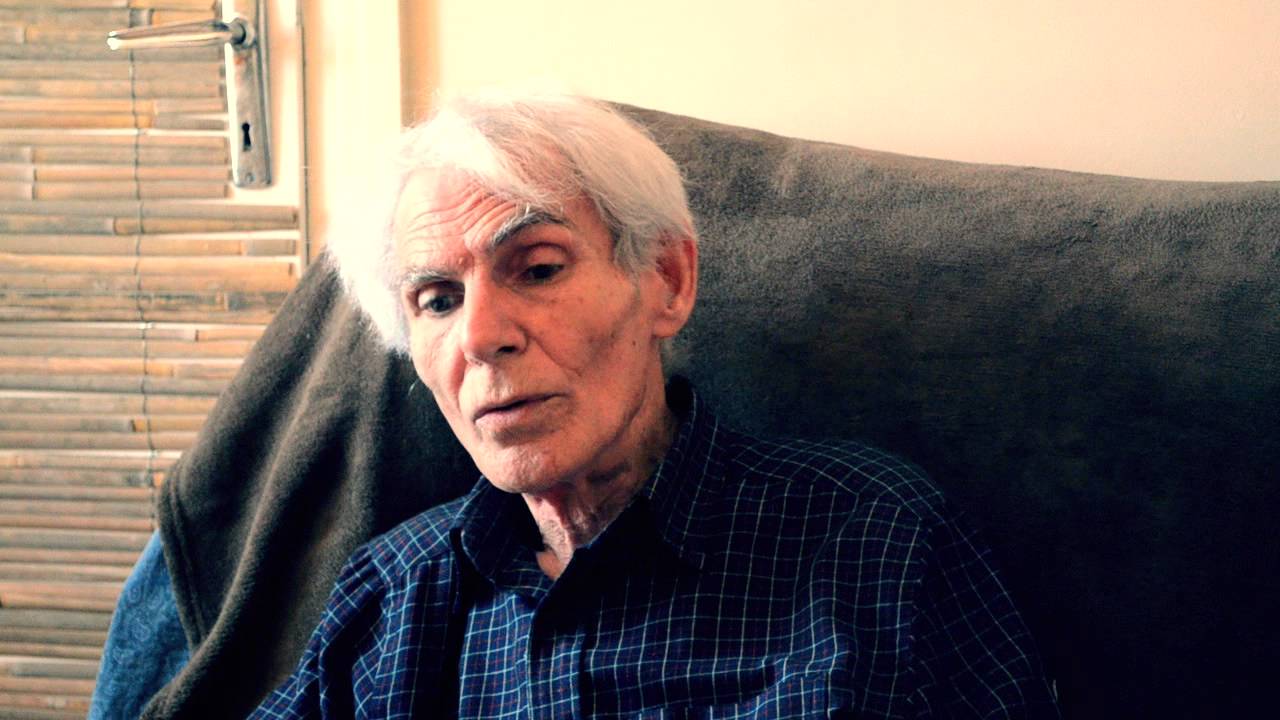
English translation of the French transcript, made with AI and not yet proofread — click a paragraph to jump to it. Show the French original
A career of transmission and the relevance of Rousseau today 0:01 So there is in art a point of perfection, as there is of goodness or maturity in nature, which the person who feels it has perfect taste, and the person who does not feel it has defective taste. There is therefore a good and a bad taste. He discusses tastes on solid grounds — I'm retired, that's obvious — otherwise I've had several jobs to get to this point, but there is still a
0:48 a constant, an invariant in all the activities I've had, is that they all have a relationship with, if not strict teaching in that sense, then with transmission, let's say. First, I trained as a teacher, I'm a philosophy teacher and I taught for a little over 11 years, both in the Paris region and south of the Sahara, and a bit in the Drôme, and then afterward I 'went into the private sector,' as they say in those circles — I left the national education system to join a fairly well-known publisher, since it was Hachette, but a subsidiary that dealt only with school textbooks intended for countries where French, as an administrative language — French-speaking countries, that is — and
1:35 so it was designing pedagogical materials, then, well, that made me travel a bit too much, and so I royally resigned from Hachette national, to which I was very attached, and — for this time to teach — but music has always been a bit my third hand, as an amateur, within an institutional framework, since it was a school, a center for musical training and promotion, to be precise, funded by the European Union — dare I say it — south of the Sahara, in Niger, in one of the poorest countries in the world. So there it is, up to today all my activities
2:22 have, well, still been linked to transmission, and when I worked for Hachette it was a publisher that published school textbooks, a subsidiary that dealt only with school textbooks. So that's the constant thread of my path — it's still transmission, always hoping that we won't spread too much nonsense and untruths. That's it, yes, that's what people say — no, no, but I don't much like the word 'specialist,' I don't want to play the expert, I mean, first of all I'm not a specialist in the strictly
3:07 academic sense, I mean, there are people who spend their whole lives being a collaborator on Rousseau's letter to his grandmother written when he was 12, whatever it may be — I'm not at that level. On the other hand, it's true that my relationship to Rousseau has remained a constant, for I couldn't say how many years now, since my secondary school studies actually, and that I find him more relevant than ever, and above all that Rousseau — whether one criticizes him or claims him as an influence — positions himself at a moment when our world simply begins to appear, I mean. That's why it's something unavoidable, to speak like the journalists, in the reference to Rousseau, because it's the moment when it becomes apparent that the three great fractures that made us what we've become are about to occur: the English industrial revolution, the
3:53 French political revolution, and this anthropological revolution that budding Romanticism represents, from which we have not emerged, in my view. That's roughly it. Yes, I had this good fortune, which is due to chance — is there such a thing as chance? — it was in the Latin Quarter, I was doing my studies there, so it's not entirely by chance that one has encounters of that kind, at that place, at that time, because now there's more food and clothing shops than studies around Louvain-Saint-Germain. But it was by chance, in a café called Le Nevi — this has been recounted in Françoise Negroni's book with Balcar, which contains some very beautiful biographical elements — and we practically
The meeting with Michel Clouscard 4:40 never left each other's side after that first contact, and for me it was — it was a decisive relationship, because whatever he may say in Le capitalisme de la séduction, which was — which was his biggest-selling book among all his works — he was kind enough to dedicate the book to me, saying 'To Dominique Pagani, to whom this book owes much,' but there he does himself an injustice, because I owe him infinitely more than the little he owes me. He had, first, an experience of the French proletariat, of the working class, which, given my overseas youth, I knew poorly — very poorly indeed — as a teenager, whereas conversely I brought him some elements of bourgeois culture, particularly on the musical level, of which he recounts a few elements in the big chapter devoted to sound systems in Le capitalisme de la
The SNCF strike and the word "privilege" 5:25 séduction. But it's an encounter, irreplaceable — you're catching me on hot topics, hot off the press. Well, at the outset, a strike at the SNCF, what could be more — I was going to say trivial, in the sense mathematicians give that term, not in the sense of vulgar, of statistically banal — a strike, right, and suddenly it's the end of the world, it's the apocalypse, it's scandalous — how can there be a strike lasting 9 days when we've seen strikes lasting 3 months, after all, we've all experienced that in the history of France, and often it's even linked to the most glorious moments of our history. I believe that all those who rail against strikes, including managers and employers, are attached to their paid holidays, which we owe
6:12 to the strikers of '36, who were on strike for much longer — let's not bite the hand that feeds us, right, our railway workers. So I'm already starting to react against the media coverage of this social movement, which is nonetheless important, because we must still remember that we are living through a period — I'm not expressing an opinion for now, I have a fixed set of statistics that anyone can go check, confirm or refute — knowing that there has never been so little strike activity in our country for a very long time; every employer knows it. Let me take this opportunity to point out that the record year, the year with the record number of strike-hours, if I may permit myself that barbarism, in our
6:58 history is 1967, a year we never talk about because there's this other year right after it that overshadows it a bit, as they'd say in — from the psychoanalytic angle — we assume everything begins in '68, and so that obscures things a bit. In 1967 there were legislative elections, very heated ones, for the government of the time — for the first time it lost in terms of vote count, after the war years. And there, I want to move on to other questions, but I do still want to point out — to take two extremes — today, whereas French people are given a reputation abroad that one shouldn't go to France because there's a strike as soon as you land at the airport, there has never been so little strike activity in our country in at least a generation, especially compared precisely to that
7:44 period. Those are my first reflections, but now let's get to serious matters, I'll be clear because there are so many detours in this story that one has a duty of clarity while trying not to be too simplistic either. I support this strike movement 150%, which goes well beyond its sectoral aspect and which concerns above all those involved and the strikers, but when they say that we are not striking only for ourselves but also for the users, for the population, and even for the very notion of public service in general — and that's a bit of tit for tat, because on the government's side too they want to make an example of this strike, by means of
8:29 media coverage that turns into demonization of the striker who 'takes us hostage' — really, that's extraordinary vocabulary, taking hostages is still a serious crime, I mean, it's serious to call people hostage-takers, you see — we trivialize expressions like that, it frightens me — 'who take us hostage,' the privileged ones, civil servants with jobs for life. Now that, I find a bit revolting, not only regarding this strike but more generally on the social level, by the fact that now everyone, in order to snatch away the few advantages that remain — I'm not talking about privilege, you'll see why I'm careful with vocabulary, it is after all my profession — the few advantages that remain to some sectors of the workforce, now people spend their time pitting them against the poorer — because you can always find someone poorer, I've lived in the poorest countries in the
9:15 world. So of course you can always find some Bangladeshi or Chadian, but you know, people pit the civil servant, well, the tenured worker who has a job for life, against the one who has precarious employment — but the one with precarious employment, well, he ought to be happy, at least someone's looking after him — but not at all, because he's supposed to consider himself privileged compared to the unemployed person who has no job at all, and the unemployed person, well, he'd better watch out, he's privileged too, because he's in France and supposedly well covered, and so on. In short, it's a rather monstrous line of reasoning where somehow the poorest person ends up being designated as privileged too. I come back to this notion of privilege since we're talking about the strike and this word keeps coming up, that the SNCF is some kind of working-class aristocracy — when you see the
10:01 faces of the people being interviewed, who are out there on the ground striking, honestly it's a bit funny, you get the impression of seeing privileged people, especially when you see the look of those who accuse them of being such, on TV sets and in talk shows. So I'm struck by the fact that this word 'privilege' is nonetheless an important word in our history — it was, after all, for the abolition of privileges that the French Revolution happened, that was the recurring term, the abolition of privileges. So the mediators — rather the media manipulators, which isn't quite the same thing — and the communicators and other characters of that sort know very well what they're doing, because privilege, in general, is a matter of birth — one had to be born noble to be
10:46 noble, until the Edict of the Paulette in 1610 — ah, you could buy a title of nobility. Ah, well, well — now you can become 'noble' if you've got the cash, as young people would say today. So there it is, privilege means these things. Now, what are we talking about? Acquired social rights, which were obtained through hard-fought struggles, historically there were deaths in these matters, in the great strikes that made the France of today, there were sacrifices, there were people — today's strikers lose a good part of their wages for every day on strike. So there, I rebel against this word 'privilege.' I'd have plenty more to say about the strike, but I presume that's not what we're here to discuss, but I want to register a bit of anger at this vocabulary, shamefully
The European Union is not Europe and did not bring peace 11:32 defamatory toward those who are perhaps in the process of saving us for the years to come, because otherwise, well, we're headed straight for the wall — if we keep going we'll become Spain, and then we'll become Greece, and so on — I mean, if we start obeying every European directive — right, very quickly I'm going to scare you here — about Europe, because what I'm about to say isn't exactly orthodox, but at the same time historians know it, they just don't say it — roughly speaking, well, I love Europe — I don't think — I don't think the European Union — when I say that, I'm already saying
12:20 Tarkovsky, Kandinsky, to change art forms, Dostoevsky are not, to my knowledge, Asians, Africans, or Americans — they're supposed to be Europeans. But already, you ask — I questioned a young person not long ago, so submissive to propaganda, poor kid, who said that Russia wasn't in Europe, for him Europe is the European Union. So there, to answer your question first, so we don't get the wrong target: I fight the European Union because I love Europe — that's the first thing, because otherwise, in general, as soon as you start criticizing the European Union, people say you're insular, closed off within your own hexagon and so on. Still, I even find that it's an insult to Europe, to its values and its history, the European
13:05 Union. First, what I'll tell you — I'll go quickly, I'll try to stay political, otherwise it'll take us too far — well, the recent European elections, and you saw clearly that this time it was rather on the defensive, all the same, a little — they could feel that the mustard was starting to rise, and not only in France, mind you. For a long time we were led to believe the French were the champions of anti-Europeanism, then we realize the English, the Danes, and so on. So then there remained one argument, you know it as well as I do, the most consensual argument of the pro-Europeans: 'Europe means peace.' Now, you're young, so you have to take this seriously, because peace — war — is the most serious thing of all, after all. And it's true that Europe has been at peace throughout the whole
13:52 period, let's say from '45 — for the first time in its history — until, I won't say until, okay, you'll see why, I'm keeping a little surprise for you — until a recent period, let's say. But Brussels Europe had absolutely nothing to do with it if we had peace during that period — it's because of what was called the balance of terror, it's all over the newspapers of the time — it's because two extra-European powers, the Soviet Union and the United States of America, were staring each other down in a standoff, saying 'whoever moves first' — obviously that's what granted us peace, an exceptionally stable period, which was not without consequences for the economy, prosperity, and so on. Stability goes hand in hand with that, you see — look at the poor countries that are up in flames right now, imagine the time it will take
14:38 them to recover from their devastation. So there, first lie: Europe is not peace. I would go even further: Europe is war — I'll surprise you there. The proof is that as soon as the Berlin Wall — well, one of the two elements — I'm not making propaganda for the Soviets here, I would have been the first shot under Stalin, talking the way I do, you can well imagine — but still, as soon as the Soviet Union fell, war returned to Europe: the wars of Yugoslavia. That's why I said '45,' not today — there was peace, that too is a lie, there's still war, there's currently war in Ukraine, not very far from the Balkans — the war started again as soon as one of the two protagonists of the balance of terror disappeared. That's hardly a coincidence. Let me point out in passing that the war began — we tend to forget this a
15:23 little — not because of Bosnia in Yugoslavia, not because of Bosnia or Croatia, but because of Slovenia, which we never talk about, the most Germanized country of the former Yugoslavia — that's the most... it's normal, for historical and geographical reasons, it's the former Austro-Hungarian empire, which had adopted the mark as a practical currency for circulation long before the rest of Yugoslavia, and a country that was recognized by the Bundesrepublik, by the Federal Republic of Germany, for the first time since 1945 — a great European country, Germany, recognizing a border change in a sovereign state. It's as if Corsica became independent tomorrow and Germany immediately recognized it — that would seem strange in Franco-German relations, right? That's what happened with Slovenia, and it's what set off the wars of Yugoslavia. There you go — I'm not
16:09 bashing the Germans, I believe I'm one of the most Germanophile men of culture in France, but I do point out in passing — and now I won't take your question, for what it's worth, on Europe, and I'll finish on this provisionally — that Europe, the European institutions headquartered in Brussels, were built to get around a major obstacle they encountered in 1945, which is that in 1945 the strongest force on the right was the Gaullists, the strongest force on the left was the communists — I'm recalling things that are in every newspaper — that is, forces that gave the Americans hives, first of all, let's not forget, that's hardly a coincidence — and to get around the state, they had to go through civil society, to speak in political categories, bypassed by foundations — see how you can already sense
16:55 today's Europe coming — through NGOs, I've seen it, in the Third World, you know, the abject fauna of predatory NGOs that serve NATO, all under the guise of humanitarianism — I respect the aid workers who are on the ground giving injections, I'm not talking about them, I'm talking about those who run them. So this Europe was built to allow Germany to take its revenge. It's harsh, what I'm saying, it sounds simplistic — there's a very common term in the politics of the '50s, '60s, still a bit in the '70s, and which has disappeared: the term 'revanchard' [revenge-seeker]. When there was the project for a European Defence Community in the 1950s, where they already wanted to rearm Germany — that was a pretext to rearm Germany — why not give it nuclear weapons, that would make
17:41 twice that, through Germany, Europe was drenched in blood — I said 'through,' I'm not saying who's to blame — the great imperialist powers can share the credit — but we had barely emerged from the bloodiest conflict in human history and already people were thinking of rearming Germany. If it hadn't been for the Gaullists on the right and the communists on the left blocking that project — and now they're talking to us again, you've seen it, 'the Russians are doing this in Ukraine, we must rearm quickly' — yes, it's starting again, the demonization of the East, of the bad Russian, who's always the villain no matter what, whether Tsarist, Communist, or Putinist — in any case he's the poorest in Europe, so he's the villain, poor thing. So there — that's what I think of this
18:27 Europe. [inaudible/music]