 Season 13 · 27 May 2025Flagrante Delights
La Bruyère
Appears in 22 videos · 26 passages, 9 of them in depth.
What Dominique Pagani says
Dominique Pagani mainly reads Les Caractères, and first of all the passage on the "point of perfection" in art, comparable to ripeness in nature: there is good and bad taste, and "one argues about tastes with good grounds"1. He often quotes this text, whether to open a workshop or when discussing beauty, and sees in it an illustration of the Greek classical moment2. He also applies it to flavours, wine and fruit: an ideal point between the unripe and the rotten3. For him, this point of perfection assumes a world where everything is in its place. The characters are fixed, without becoming, locked in their determination, and they form an image of the Ancien Régime that he compares to baroque music4. He also singles out the text on peasants, "wild animals" who produce bread for others, which he considers the first great social text5. He places La Bruyère among the moralists Nietzsche loved, and speaks of a "Marxist La Bruyère" side to Clouscard.
- 1Education : le Beau s'apprend-il ?20 Jul 2018 · 1:08:58
- 2#9 TABLEAUX D'UNE EXPOSITION : L'art, vu d'ici ou d'en face?10 Feb 2022 · 47:54
- 3Flagrandélices27 May 2025 · 1:20:14
- 4Au bistrot avec Pagani : partie 118 Jun 2016 · 57:19
- 5La Phénoménologie de L'esprit2 Jul 2018 · 1:02:24
Summary produced automatically from 26 of the passages below, to be reviewed; the numbers link to the moment in the session.
 Who is this?
Jean de La Bruyère (UK:, UK: ; French:; 16 August 1645 – 11 May 1696) was a French philosopher and moralist who was noted for his satire.
Read the article on WikipediaText: Wikipédia, CC BY-SA 4.0 · Portrait: Élisabeth Louise Vigée Le Brun / After Pierre Drevet / After Jean Dieu de Saint-Jean, Public domain
Season 13 · 27 May 2025Flagrante Delights Season 10 · 10 Feb 2022#9 PICTURES AT AN EXHIBITION: Art, seen from here or from the other side?
 Season 7 · 30 Mar 2020#2 - Harnessed to Confinitude
 Season 5.1 · 2 Nov 2018#5.1 bis FaceBook Live / Questions
- 44:38The CharactersFirst to draw attention to the plight of the peasants, but each of his characters remains confined within his determination.
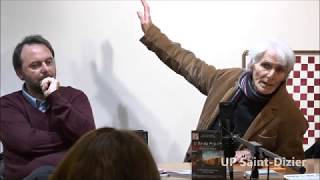 Talks · 20 Jul 2018Education: can the Beautiful be learned?
- 1:08:58The CharactersThere exists in art a point of perfection, as there is of ripeness in nature; there is good and bad taste, and one can dispute matters of taste with good reason.
 Talks · 2 Jul 2018The Phenomenology of Spirit
- 1:02:24The CharactersHis text on peasants, animals with human faces who produce others' bread, is the first great social text.
 Talks · 20 May 2018Marxist Café - Work and the right to work
 Season 3 · 1 Aug 2017#3.6 From Ulysses to Daedalus
- 46:48The CharactersThere is in art a point of perfection as there is a point of ripeness in nature; disputes of taste have grounds.
 Season 13 · 20 Sept 2024Sickness, misfortune, evil
- 34:54Great moralist of the Grand Siècle, a repertoire Nietzsche adored.
 Season 12 · 17 Oct 2023Neither left nor right? Islamo-leftism?
- 26:02Characters, figure of absolute determination.
 Series · 1 Jun 2022POLYMORPHOUSLY PERVERSE MOZART • Pagani Parle Musique
- 13:43The CharactersQuoted: there is a point of perfection in art, and whoever senses it has perfect taste.
 Series · 2 Feb 2021Musicosophy 13. Mozart restored
- 1:07:41The CharactersText on peasants as "wild animals."
 Season 6 · 23 Oct 2019#6.1 • The Logic of the Subject • season 6 / 2019-20
- 37:56Nietzsche's dreamed-of model.
 Season 5.1 · 6 Dec 2018#5.2 ter FaceBookLive / Questions (2) following Workshop #5.2
- 13:54His Caractères illustrate the quasi-timeless identity of the Ancien Régime.
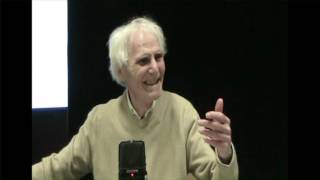 Season 2 · 1 Aug 2017#2.5 Between crisis and war: Philosophising?
- 1:54:24His Characters: everything in its place in the old world.
 Talks · 18 Jun 2016At the bistro with Pagani: part 1
- 57:19The CharactersA timeless world where everything is in its place, like baroque music.
 Series · 1 Feb 2016Hegel on the Beach 1/5
- 2:06:30The CharactersEveryone there is in his own little box for eternity, an image of the Ancien Régime.
 Series · 1 Feb 2016Marx on the Beach 2/2
- 21:02The CharactersEvoked for the time when everything is in its place.
 Talks · 26 Apr 2015The Music of History
- 29:32The Charactersa fixed conception of characters, without development
 Series · 26 Sept 2014#4 Neo-fascism and the ideology of desire; on the thought of M.Clouscard.
- 1:01Cited among the French moralists.
 Series · 20 Sept 2014#1 Presentation; the EU; Clouscard; Rousseau.
- 0:01The CharactersPassage read at the opening on the point of perfection in art, and good and bad taste.
 Series · 7 Jul 2012Radio Galère - Michel Clouscard - 2
- 42:50A Marxist La Bruyère side in Clouscard.