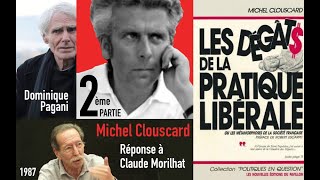
Dominique Pagani mentions Céline mainly in his sessions devoted to Michel Clouscard. He gives him as the typical example of a right-wing, even far-right, anarchism, which he judges "vile" and which liberal-libertarians appreciate12. He notes that since the 1970s people cite Céline in place of Aragon, just as they cite Heidegger in place of Marx34. He does not dispute his literary power. He holds that aesthetic value must be separated from moral or political value: bad political ideas do not make a bad writer56. Yet he sets a limit on this admiration: an author who called on Jünger for the extermination of the Jews cannot be regarded as the greatest writer of all time7. From 2021 on, he argues that it may be Céline's style that is the most Nazi. He targets in particular this "populo" style, which always keeps the people in the unspeakable, whereas the worker dreams of getting out of the filth89.
Summary produced automatically from 15 of the passages below, to be reviewed; the numbers link to the moment in the session.
Who is this?
Louis Ferdinand Auguste Destouches (27 May 1894 – 1 July 1961), better known by the pen name Louis-Ferdinand Céline ( say-LEEN; French: ), was a French novelist, polemicist, and physician. His first novel Journey to the End of the Night (1932) won the Prix Renaudot but divided critics due to the author's pessimistic depiction of the human condition and his writing style based on working-class speech. In subsequent novels such as Death on the Installment Plan (1936), Guignol's Band (1944) and Castle to Castle (1957), Céline further developed an innovative and distinctive literary style. […]
7:26right-wing anarchist, prized by liberal-libertarians
50:19Journey to the End of the NightA participant considers him a very great writer; Céline is discussed in place of Aragon, as Heidegger is in place of Marx.

 Talks · 23 May 2026NEO-FASCISM AND THE IDEOLOGY OF DESIRE: Is Michel CLOUSCARD still relevant? - with Dominique PAGANI