 Season 11 · 14 Oct 2022Clouscard and the problem of Socrates
- 56:50Course in General LinguisticsNot a structuralist; double articulation of human language and arbitrariness of the sign.
Appears in 14 videos · 15 passages, 3 of them in depth.
Dominique Pagani sees Saussure as the starting point of contemporary linguistics, founded as a structural and synchronic linguistics1. He borrows from him the notion of synchrony, which he uses as early as a session on Rousseau2, and notes that Saussure restores this dimension of language, which philology had neglected3. He takes up several theses of the Course in General Linguistics: the arbitrariness of the sign, the double articulation specific to human language4, the independence of signifier and signified, the distinction between language, langue and parole, and a linguistic relevance based on opposition between terms. He notes that this distinction between langue and parole leaves aside continuous variables5, which matters for his thinking about music. His position on structuralism differs from one session to another. He makes Saussure's structural linguistics the root of structuralism6. Elsewhere, he presents him as a scientist rather than an ideologue, and even as "not a structuralist". He also cites glossematics as an extension of his thought and links Nerval to phonological problems approached through him.
Summary produced automatically from 15 of the passages below, to be reviewed; the numbers link to the moment in the session.
 Who is this?
Ferdinand Mongin de Saussure (; French:; 26 November 1857 – 22 February 1913) was a Swiss linguist, semiotician and philosopher. His ideas laid a foundation for many significant developments in both linguistics and semiotics in the 20th century. He is widely considered one of the founders of 20th-century linguistics and one of two major founders (together with Charles Sanders Peirce) of semiotics, or semiology, as Saussure called it. […]
Read the article on WikipediaText: Wikipédia, CC BY-SA 4.0, excerpt · Portrait: "F. Jullien Genève", maybe Frank-Henri Jullien (1882–1938), CC BY-SA 4.0
Season 11 · 14 Oct 2022Clouscard and the problem of Socrates Season 7 · 27 Mar 2020#1 - Harnessed to Confinitude
 Season 5.2 · 4 Feb 2019#5.4 Nature or Landscape?
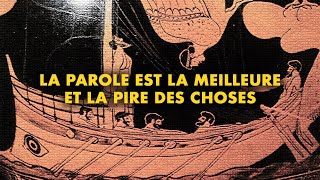 Season 11 · 19 Oct 2022"Speech is the best and the worst of things" (Aesop)
 Season 11 · 28 Sept 2022And what about the subject in all this? Hölderlin, Mallarmé and Baudelaire
 Series · 9 Feb 2021Musicosophy 15. Plato, Rousseau, Hegel and music
 Series · 24 Jan 2021Musicosophy 11. Modal and tonal music
 Series · 17 Dec 2020Musicosophy 7. The Greeks, myth and music
 Series · 3 Dec 2020Musicosophy 1. Schubert and the master singers
 Season 9.1 · 23 Oct 2020#2 Benefits and harms of amnesia...
 Talks · 5 Oct 2020Calves and Things (2): Ecologism, the highest stage of capitalism?
 Series · 23 Aug 2019D. Pagani / M. Clouscard's reply to C. Morilhat (1987)
 Talks · 26 Apr 2015The Music of History
 Series · 20 Sept 2014#2 Rousseau, a world that begins