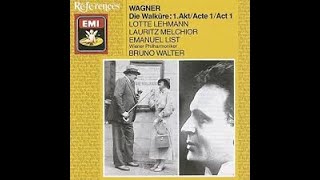
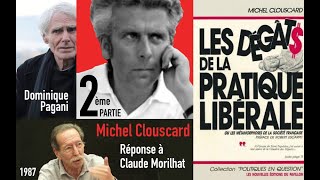
Dominique Pagani reads Le Cru et le Cuit (The Raw and the Cooked) above all, and reads it closely. He draws on its overture, where music replaces linguistics as the model: music and myth "enter time only to leave it", and Wagner becomes there the "undeniable father of the structural analysis of myths"1. He takes an interest in the third term placed between the raw and the cooked, the fermented or the rotten, which he compares to the Kantian bridge and to the middle term between the natural and the conventional2. He also draws on the analysis of the incest prohibition, which is universal without being natural. He respects his musical culture and his work on kinship. He reproaches him, however, for a "Kantianism without a transcendental subject" that sets aside history and praxis, for an interest limited to "societies without history"3, for anti-progressivism and, late in life, for Malthusianism. Finally, he criticises the culturalism and relativism that claim his authority and were used to liquidate Marxism4.
Summary produced automatically from 130 of the passages below, to be reviewed; the numbers link to the moment in the session.
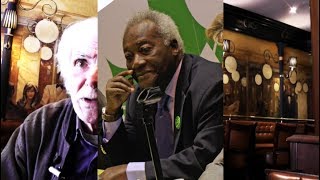
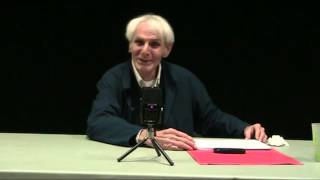
Who is this?
Claude Lévi-Strauss ( klawd LAY-vee STROWSS; French:; 28 November 1908 – 30 October 2009) was a Belgian-born French anthropologist and ethnologist whose work was key in the development of the theories of structuralism and structural anthropology. He held the chair of Social Anthropology at the Collège de France between 1959 and 1982, was elected a member of the Académie française in 1973 and was a member of the School for Advanced Studies in the Social Sciences in Paris. He received numerous honors from universities and institutions throughout the world. […]
31:01The Raw and the CookedCriticized by Clouscard, a figure of structuralism against Marxism; with the Mythologiques, he moves from linguistics to music.
1:26:44The Raw and the CookedWants to transcend the opposition of the sensible and the intelligible and restore secondary qualities to the commerce of truth.
1:37:47The Raw and the CookedThe exposition of myths demands musical forms: succession, relative density, solo and tutti, recitative and aria.
1:51:40The Raw and the CookedMyth and music are languages that transcend articulate language while requiring time.
2:31Tristes TropiquesInitiator of anthropology; the first sentence of Tristes Tropiques, typical of the dream of the lone White man among natives.
5:32One of the finest musical cultures in Paris, which does not prevent ideological blindness.
10:07Structural AnthropologyInitiator of the term structure with Structural Anthropology.
54:35The Raw and the CookedMusic taught him to listen to myths; he accepts being a Kantianism without transcendental subject and studies how myths think each other.
19:32The Bororo with whom he conversed did not ask themselves the question of their identity.
38:31After him one says anthropologist rather than ethnologist; he had the merit of recording oral narratives.
40:57Tristes TropiquesGreat musical culture, Le Cru et le Cuit his bedside book; but Tristes Tropiques expresses the white man's fantasy of wanting to be alone.
44:47His relation to the Bororo reflects an investment in a fantasized purity of the native.
49:15The Elementary Structures of KinshipNo law forbids keeping one's hand on the fire: if there is a law forbidding something, it is because there is a desire.
54:50A great thinker who began the demarxification of the university by dealing with "peoples without history"; he validates the formula "Kantianism without a transcendental subject."
2:10:50The Raw and the CookedOpposes nature and culture; in Amazonian myths, the jaguar teaches fire to man; between raw and cooked there is a third term.
1:42:01The Raw and the CookedAn anthropologist made use of against Marxism. His musical overture recognizes Wagner as the father of the structural analysis of myths.
59:46A specialist in myth, he advances the study of kinship; yet his "societies without history" open the way to cultural relativism and the liquidation of the Marxist reference.
12:10The Raw and the CookedIntroduced mathematical models into the study of myths; in the "Ouverture," he makes Wagner the father of the structural analysis of myths.
49:21The Elementary Structures of KinshipA neo-Kantian, he distinguishes laws of nature from rules of culture; the prohibition of incest is an exception.
1:13:47The Raw and the CookedFather of structuralism; subscribes to the definition of his system as a Kantianism without a transcendental subject; the raw is natural, the cooked is cultural.
1:01:21The Raw and the CookedEstablishes the break between nature and culture, which he prefers to call history; among the Bororo, the jaguar teaches fire.
13:25Commented on by Derrida in "Structure, Sign and Play."
27:35The Raw and the CookedHe replaces ethnology with anthropology and calls himself a specialist in societies without history, a double play on words.
48:54He makes Wagner the father of the structural analysis of myths.
1:27:28Neo-kantian, like Althusser, through the rupture between the logical and the ontological.
41:03The Raw and the CookedHe opposes nature and culture, but finds the interest in the third term between the raw and the cooked. He also criticizes his late Malthusianism.

 Series · 3 Dec 2020#2 From Lévi-Strauss to Nerval, on music