 Cycle 15 · 28 Aug 2026From Copernicus to Lenin: revolution!
- 9:06The triangle of two subjects and an object, like a peace pipe passed around, defines the symbolic field.
Worked through in 30 videos · 54 passages.
Dominique Pagani sets the symbolic order against the natural order: where nature knows only causes and effects, the human world is made of signs and meaning1. This order, produced by language, presupposes that one has left nature behind. It has a ternary structure: the triangle of speaker, thing and other, with the word at the centre2. He links it to the Freudian and Lacanian field, and regards Marxism and psychoanalysis as the two great ways of thinking about this order3. The symbolic order is not scientific, but it is rigorous: it leaves no detail to chance4. It does not do away with natural causality, but it is decisive in human relations5. He takes his examples from Nerval, where the landscape obeys a symbolic causality, from Wagner, from the rites of the meal and from the pairing of water with the feminine. He adds that the reality of this order is not a fiction, and that confusing it with the real is a form of naive realism.
Summary produced automatically from 54 of the passages below, to be reviewed; the numbers link to the moment in the session.
Cycle 15 · 28 Aug 2026From Copernicus to Lenin: revolution! Cycle 12 · 4 Jun 2024The matrix of all illusion: the past lived as present
 Cycle 12 · 30 May 2024From fidelity to grace: from substance to subject
 Cycle 12 · 1 Apr 2024The quest for the Grail, sanctimony or sacrilege?
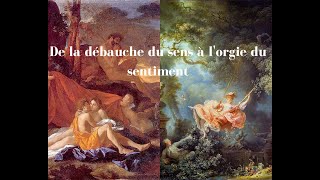 Talks · 29 May 2023From the debauchery of sense to the orgy of sentiment
 Cycle 11 · 18 May 2023Worldliness in Clouscard, or privileges for all
 Cycle 11 · 18 Mar 2023A springtime of the peoples?
 Cycle 10 · 7 Apr 2022#12 From Kafka to Proust, the dialectical passage from the intermezzo to the perpetuated edge
 Cycle 10 · 24 Nov 2021#10.5 The figure of Antigone, such as into herself at last…
 Series · 4 Oct 2021#4 Nomad and sedentary: the case of Nerval
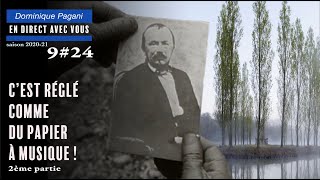 Cycle 9.2 · 30 Jun 2021#9.24 “Ruled like music paper!” Nerval, Baudelaire (part 2)
 Cycle 9.2 · 9 Jun 2021#9.23 “Ruled like music paper!” Bach, Nerval, Lévi-Strauss
 Series · 6 Jun 2021#3 Nomad or sedentary? The case of Nerval
 Series · 31 Mar 2021Wagner and his interpreters, approaching Clouscard, Marx = Theseus?
 Cycle 9.2 · 17 Mar 2021#9.17 The geopolitical metaphor: Planck, Descartes, Clouscard
 Cycle 9.2 · 14 Jan 2021#9.12 How can sciences of history be real?
 Talks · 6 Oct 2020Calves and Things (3): the dictatorship of the bobotariat
 Talks · 4 Oct 2020Calves and Things: the preface
 Cycle 6 · 3 Dec 2019#6.2 The logic of the subject in the face of the reconstitution of Nazism
 Cycle 6 · 10 Nov 2019#6.1 Prelude: Lacan, “Function and field of speech and language”
 Series · 12 Mar 2019Pablo Servigne
 Cycle 5.2 · 25 Jan 2019#5.4 Introduction: nature or landscape?
 Cycle 4 · 14 Jun 2018#4.9 Angélique (by Nerval)
 Cycle 4 · 12 Apr 2018#4.7 Angélique (by Nerval)
 Cycle 4 · 15 Mar 2018#4.6 Angélique (by Nerval)
 Cycle 4 · 11 Dec 2017#4.3 Angélique (by Nerval)
 Cycle 3 · 1 Aug 2017#3.4 From Ulysses to Daedalus
 Cycle 2 · 15 Feb 2016#2.1 Between crisis and war: philosophising?
 Series · 29 Jan 2016What is to be done? 2/3
 Cycle 1 · 11 Dec 2015#1.7 Between crisis and war: philosophising?