 Series · 6 Jul 2026From Plato to Proust - Readings on the Spot
- 23:52One does not possess the young girl without possessing what is in her eyes: it is her whole life that inspires desire.
Worked through in 56 videos · 85 passages.
Dominique Pagani treats desire as a constant object of philosophy. He holds it to be primary, even for knowledge: we judge things good because we desire them1. He contrasts it with need, which is determinate and finite, like thirst. Human desire, by contrast, is infinite because it is indeterminate, and its content mixes nature and history2. Being modern, in his view, means recognizing this absence of measure, unlike the Greeks, who held to measure; Rousseau and Faust illustrate it. Following Hegel, he holds that consciousness is desire and that desire destroys its object, which nevertheless keeps reappearing3. In aesthetics, he maintains against Kant that every pleasure presupposes a satisfied desire, often an unconscious one: the beautiful object knows more about me than I do4. For him, production serves desire rather than need, and therefore has no end point. With Clouscard, he criticizes Deleuze's presentation of desire as creative, which goes along with libidinal consumption5.
Summary produced automatically from 85 of the passages below, to be reviewed; the numbers link to the moment in the session.
Series · 6 Jul 2026From Plato to Proust - Readings on the Spot Season 14 · 13 Apr 2026Language and thought: The case of Lavoisier
 Season 13 · 25 Jul 2025Naturalist ideology / Answers to questions - Dominique Pagani
 Talks · 7 Feb 2025[INTERVIEW] DOMINIQUE PAGANI - Michel Clouscard and the betrayal of May 68
 Season 13 · 6 Feb 2025On the anti-Sovietism of the Khmer Rouge-Greens
 Season 13 · 20 Sept 2024Sickness, misfortune, evil
 Season 12 · 4 Jun 2024The matrix of all illusion: the past lived as present
 Season 12 · 1 Apr 2024The quest for the Grail, sanctimony or sacrilege?
 Season 11 · 3 Sept 2023Worldliness in Clouscard: Desiring what? Through whom??
 Season 11 · 7 Aug 2023NIGER SPECIAL: Should we "blacken the corpses"?
 Season 11 · 9 Jul 2023Worldliness in Clouscard - The clash of worlds?
 Season 11 · 29 Jun 2023Worldliness in Clouscard: Aragon and the positivity of the negative
 Talks · 29 May 2023PHILOSOPHY with PAGANI: D for DESIRE
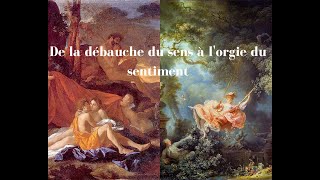 Talks · 29 May 2023Dominique Pagani: From the debauchery of sense to the orgy of sentiment
 Season 11 · 14 Jan 2023Beware of misreadings!! Clouscard and the ideology of desire, in homage to Le Précepteur
 Season 11 · 12 Dec 2022Hesitation fascinated by hearing and by sight: Siegfried and Perceval
 Talks · 14 Jul 2022From Plato to world revolution, by Dominique Pagani
 Season 10 · 23 Jun 2022#15 Nietzsche: Philosophical or musical relevance? Answers to questions
 Season 10 · 10 Jun 2022#14 Caves of Yesterday and Today - From Plato to modernity
 Season 10 · 23 Dec 202110#7 "Post-modern" eco-petty-Nazism - Plato's Gorgias
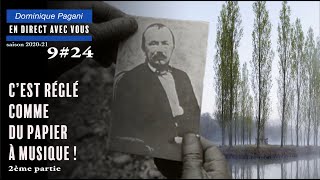 Season 9.2 · 30 Jun 20219 #24 "Ruled like music paper!" • Nerval • Baudelaire • Part 2
 Series · 6 Jun 2021#3 Nomad or sedentary? - The case of Nerval
 Season 9.2 · 27 May 20219 #22 Science and/or philosophy of "artificial intelligence" - Part 2
 Series · 31 Mar 2021Wagner and his interpreters, Approaching Clouscard, Marx = Theseus? • Philosophical Q&A • Pagani
 Series · 25 Mar 2021Musicosophy 18. What is musical in music
 Season 9.2 · 17 Mar 20219 #17 The geopolitical metaphor • Planck • Descartes • Clouscard • Dominique Pagani
 Series · 9 Feb 2021Musicosophy 15. Plato, Rousseau, Hegel and music
 Series · 3 Dec 2020Musicosophy 4. Sound ghettos
 Season 9.1 · 30 Nov 2020#6 Answers to questions
 Season 9.1 · 19 Nov 2020#5 Benefits and harms of amnesia...
 Season 8 · 9 Jul 2020#13 • Return to the logics of the subject
 Season 8 · 2 Jul 2020#12 • Return to the logics of the subject
 Season 8 · 30 May 2020#9 • Return to the logics of the subject
 Season 7 · 26 Apr 2020#6 • Harnessed to confinitude
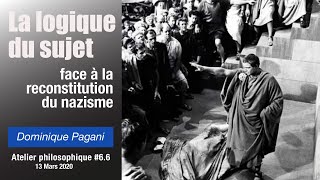 Season 6 · 29 Mar 2020#6.6 • The Logic of the Subject in the face of the reconstitution of Nazism
 Season 6 · 3 Dec 2019#6.2 • The Logic of the Subject in the face of the reconstitution of Nazism
 Series · 12 Mar 2019Dominique Pagani ▷II Pablo Servigne
 Season 5.1 · 6 Dec 2018#5.2 bis FaceBookLive / Questions (1)
 Season 5.1 · 21 Nov 2018#5.2 The philosopher's Odyssey: Revolutionary thought
 Talks · 20 Jul 2018Education: can the Beautiful be learned?
 Talks · 16 Nov 2017The philosopher's two enemies: The dogmatist and the sceptic.
 Season 2 · 1 Aug 2017#2.5 Between crisis and war: Philosophising?
 Season 3 · 1 Aug 2017#3.4 From Ulysses to Daedalus
 Season 2 · 10 Mar 2016#2.4 Between crisis and war: Philosophising?
 Series · 1 Feb 2016Hegel on the Beach 2/5
 Series · 29 Jan 2016What is to be done? 1/3
 Season 1 · 10 Dec 2015#1.6 Between crisis and war: Philosophising?
 Talks · 26 Apr 2015The Music of History
 Series · 9 Jan 2015Z for Zero
 Series · 27 Dec 2014M for Music
 Series · 20 Dec 2014F for Farniente
 Series · 19 Dec 2014E for Enfance (Childhood)
 Series · 17 Dec 2014D for Desire
 Series · 27 Sept 2014#5 Libertarian liberalism, libidinal consumption and music...
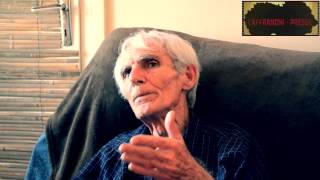 Series · 26 Sept 2014#4 Neo-fascism and the ideology of desire; on the thought of M.Clouscard.
 Series · 7 Jul 2012Radio Galère - Michel Clouscard - 2