Summary Dominique Pagani sees Beethoven as the great break in music, contemporary with the French Revolution. He links him to the generation of Hegel and Hölderlin, who were twenty when the Bastille fell1 . With Beethoven, freedom enters rhythm, which becomes unpredictable, in contrast to Baroque metre and to Bach's "unfolding"2 3 . He stresses sonata form, the contrast between a brutal theme and a tender one, and a development that draws a whole universe from a trivial cell. He calls him a dramatist and contrasts him with Schubert's lyrical instant4 5 . He often returns to the Ninth: the despairing first movement resolves nothing, then the finale brings the voice back and a collective salvation, which he connects with Hegel's "dawn"6 7 . He examines closely the scherzo of the "Archduke" Trio, where popular and learned music mix, and the Arietta of Op. 111. For him, the late quartets foreshadow the twentieth century. He considers the use of the Ode to Joy as a European anthem an abuse.
1 #10.4 From Lascaux to modern music, the permanence of the political stakes in aesthetics 3 Nov 2021 · 8:01 2 #5 Libertarian liberalism, libidinal consumption and music… 27 Sept 2014 · 21:59 3 #5.2 The philosopher's Odyssey: revolutionary thought 21 Nov 2018 · 1:17:35 4 #3 What is called modern music? 3 Dec 2020 · 1:11:53 5 Tipsy Beethoven! 6 Jul 2022 · 0:00 6 #5.2 The philosopher's Odyssey: revolutionary thought 21 Nov 2018 · 1:15:54 7 #5 Happiness versus the death drive in music 11 Dec 2020 · 55:19 Summary produced automatically from 150 of the passages below, to be reviewed; the numbers link to the moment in the session.
Who is this? Ludwig van Beethoven (baptised 17 December 1770 – 26 March 1827) was a German composer, conductor, and pianist. Regarded as one of the greatest composers in the history of Western music, he was mentored during the Classical period, and his musical style was a key driver of the transition to Romantic music, and the expansion of instrumental forms such as the symphony, the piano sonata and the string quartet. His compositions have attracted extraordinary casual and scholarly interest, and remain among the most performed in the world. […]
Read the article on Wikipedia Text: Wikipédia , CC BY-SA 4.0 , excerpt · Portrait: Joseph Karl Stieler, Public domain
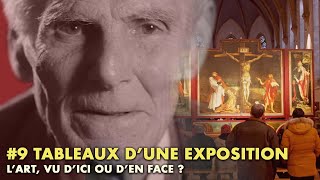
Series · 15 Dec 2020 #6 The jazz variation… by Beethoven2:37 Piano Sonata No. 32, Op. 111 The finale of his last sonata contains the so-called jazz variation, a term that did not exist in his time.6:17 A musician of the message, he rarely writes pianistically; he seems simple but remains very difficult to perform. 25:21 Violin Sonata No. 9 "Kreutzer Sonata" Originally dedicated to Bridgetower, premiered by him with Beethoven at the piano despite their falling-out over a woman.1:39:13 Symphony No. 5 The four notes of the motif organize an entire chaos into a sonic universe and pass through every mode of being.1:45:55 Piano Sonata No. 32, Op. 111 The Arietta, a pianistic testament, carries a trivial theme through sonic universes without internal rupture.Cycle 10 · 3 Nov 2021 #10.4 From Lascaux to modern music, the permanence of the political stakes in aesthetics3:20 String Quartet No. 16, Op. 135 Last quartet; the last quartets and sonatas of the third period count for all subsequent music.8:01 Born in 1770 like Hegel and Hölderlin, he was twenty at the storming of the Bastille. 25:41 Symphony No. 5 The contrast between a brutal theme and a tender theme characterizes sonata form, which he masters better than anyone.36:06 String Quartet No. 16, Op. 135 The "Muss es sein? Es muss sein" of the finale answers a remark made by his cleaning woman.58:51 Symphony No. 9 Chooses Schiller's text for the finale of his last symphony.Series · 6 Jul 2022 Tipsy Beethoven!0:00 Symphony No. 5 He creates a musical universe in four movements out of a derisory cell; with him we enter modernity and he brings sonata form to perfection.2:44 With him, the minuet becomes a scherzo. 5:10 Archduke Trio Against the image of the threatening Beethoven from the Kenwood advertisement, the scherzo of this trio shows a playful, light, almost tipsy Beethoven.7:43 Archduke Trio He analyzes the exposition of the theme, the trilogue of the three instruments, and the central fugal and chromatic passage, a fusion of the popular and the learned.9:42 A Dionysian Beethoven, who called himself the Bacchus who presses for men a wine of magnificence. Series · 11 Dec 2020 #5 Happiness versus the death drive in music14:12 Archduke Trio First to make the popular dance melody resound in the most constructed music, with calculated vulgarities laid over fugatos.17:42 Expresses what has just happened historically: the Revolution's collision of classes. 45:21 Anti-Beethoven predicates join anti-Hugo ones; his last quartets are closer to the 20th century than many romantic works. 55:19 Symphony No. 9 One hears his finale when Hegel speaks of the Revolution as a dawn.1:10:00 Maintains the dramatic whip-crack until the end of his life. Series · 3 Dec 2020 #2 From Lévi-Strauss to Nerval, on music18:03 Normalized today, he grated on his contemporaries' ears; his last quartets, last sonatas, and bagatelles anticipate Webern. 27:04 Children prefer him to Mozart because he disrupts a code. 45:06 Symphony No. 9 The reappearance of speech in the finale makes the work popular; the beginning of the first movement is an accumulation of energy.49:21 Piano Sonata No. 32, Op. 111 The Arietta, a title almost ironic, presents a trivial theme whose variations are of extraordinary complexity.1:14:54 Symphony No. 9 He recalls the collective destiny by sounding the popular anthem, as if in echo of the storming of the Bastille.Series · 3 Dec 2020 #3 What is called modern music?2:56 The first to make music corresponding to the new historical regime. 12:55 Music before and after him has nothing in common; he starts from the classical sonata form and pushes the consequences of Haydn's break. 52:52 Archduke Trio He makes both peasant modal music and the strictly unheard-of, as in the chromatic fugue at the center of the Archduke's scherzo.1:11:53 His sonata constantly relaunches action through agogics: the opposite of Schubert's lyrical instant. Talks · 26 Apr 2015 The music of history33:05 the late Beethoven of the quartets foresees the music of the twentieth century with a material poor in timbres 37:36 his early works are another world, chaotic and anguished, after the French Revolution 55:30 the tension between a virile theme and a tender theme in sonata form 1:44:42 Ninth Symphony the beginning without a theme, pure accumulation of energy; a modernity that does not ageSeries · 25 Mar 2021 #17 Interpretation28:52 Piano Concerto No. 4 Offers several written cadenzas: the improvised cadenza gradually becomes written.31:34 His improvisations made people faint; his last quartets were premiered in taverns. Series · 10 Mar 2021 #16 Programme music, pure music7:19 The Pastoral Symphony Introduces programmatic elements, such as the 'Scene by the Brook,' a title in his own hand.32:49 The Pastoral Symphony Speaks of 'expression of feeling rather than painting,' which anticipates impressionism; the symphony is not a picture.47:00 Piano Sonata "Appassionata" Publisher's title; its contrasts, from sotto voce to fortissimo, are typically Beethovenian.Series · 3 Dec 2020 #4 Sound ghettos9:56 The mass of his quartets, an imperishable monument. 14:15 Musician of the message, indifferent to timbre: his message retains its force on the piano. 27:23 More brutal than any rock, dramatic rather than lyrical, he wakes the listener with an unexpected fortissimo. 45:12 Kept the Well-Tempered Clavier on his piano; fugues in sonatas 109, 110, 111 and in the quartets. 1:20:32 Begins writing his own concerto cadenzas. Cycle 5.1 · 21 Nov 2018 #5.2 The philosopher's Odyssey: revolutionary thought1:15:54 Symphony No. 9 No hymn to joy without the first despairing movement that resolves nothing.1:17:35 His becoming-development, animal, opposed to Bach's becoming-unfolding. Talks · 2 Dec 2024 Napoleon, or the reasons of cunning12:57 Born in 1770, like Hegel and Hölderlin. 47:14 Symphony No. 3 "Eroica" Wanted to dedicate it to General Bonaparte, tears up the dedication after the coronation; the "Emperor" concerto conveys this spirit.Cycle 11 · 3 Sept 2023 Worldliness in Clouscard: desiring what? Through whom?20:23 Born in 1770, like Hegel and Hölderlin. 1:35:43 Symphony No. 9 The finale brings back the voice: the collective returns triumphant after a cure of individuality.1:41:45 Symphony No. 9 Only the Beethovenian hymn illustrates the third moment, collective liberation.Cycle 11 · 29 Jun 2023 Worldliness in Clouscard: Aragon and the positivity of the negative1:48:48 Symphony No. 9 Champion of instrumental music; the final chorus of the Ninth brings the collective back into the public light and closes the cycle.Series · 22 Jun 2022 From Bach to the Pygmies14:03 His waltzes, an example of popular forms within classical music. 15:39 When he improvised, people fainted and had to be carried out on stretchers. Cycle 10 · 10 Jun 2022 #14 Caves of yesterday and today: from Plato to modernity1:05:56 Piano Concerto No. 5 "Emperor" He corrects a slip: Beethoven composed five concertos, which he has listened to since age fourteen in Côte d'Ivoire.Cycle 9.2 · 27 May 2021 #9.22 Science and/or philosophy of “artificial intelligence” (part 2)4:26 Piano Sonata No. 14 "Moonlight" The title "Moonlight" does not come from the composer but from the publishers, who know it sells.42:13 A machine can play its sonata at a fixed tempo, but cannot choose where to slow down nor compose it. Series · 25 Mar 2021 #18 What is musical in music32:45 Schiller's hymns inspired the Ninth Symphony in him. 1:19:55 Symphony No. 6 "Pastoral" After the storm, a very simple melody that unravels and liberates; great triumphs in major key.Series · 7 Feb 2021 #14 Mozart once more32:07 The Ruins of Athens His Turkish march attests to turquerie as a genre.35:54 Kreutzer Sonata His Gypsy refrains delighted the Viennese public.54:16 Always kept the Well-Tempered Clavier on his piano. 1:16:33 With a theme that is nothing, he creates a universe through development, unlike Mozart's melodic fecundity. Series · 28 Jan 2021 #12 Nietzsche (right up) against Wagner5:35 He is part of the sequence from Bach to Wagner. 1:27:13 Kreutzer Sonata The sonata was originally intended for a Black violinist, who premiered it by sight-reading over his shoulder.Series · 24 Jan 2021 #11 Modal and tonal music36:32 "Hammerklavier" Sonata The sonata said to be the most difficult, in B-flat.1:13:17 Symphony No. 9 Nine symphonies; the finale of the Ninth recapitulates the themes, the first cyclic form.1:48:59 Symphony No. 9 The Ode to Joy on Schiller's text.Series · 15 Jan 2021 #9 Romantic irony and the Vinteuil sonata40:47 Symphony No. 9 The upsurge of the chorus and the ode to joy sheds light on the two dawns that sing like two choirs in the dream.Cycle 9.2 · 14 Jan 2021 #9.12 How can sciences of history be real?1:55:16 He carried the dramatic torch to great heights in instrumental music; Wagner takes it up in vocal music. Series · 3 Dec 2020 #1 Schubert and the master singers4:02 Incomparable dramatist; his example crushes the entire Romantic generation. 39:08 Symphony No. 9 The finale of the Ninth, the great resolution of conflicts, which Schubert does not attain.53:16 Symphony No. 9 For Wagner, the Bayreuth festival must open with the Ninth.57:59 Under Beethoven, the revolutionary bourgeoisie asserts itself, concludes and decides. Cycle 8 · 9 Jul 2020 #13 Return to the logics of the subject1:07:34 Contemporary of Kant and of the aesthetics of the sublime. 1:32:05 Symphony No. 9 Born the same year as Hölderlin and Hegel; the Ninth traverses despair before the Ode to Joy makes salvation collective.Cycle 7 · 11 Apr 2020 #4 Harnessed to confinitude54:45 He marks the break, contemporary with the French Revolution, from which German music comes to dominate. Cycle 6 · 29 Mar 2020 #6.6 The logic of the subject in the face of the reconstitution of Nazism1:05:37 Symphony No. 9 His slow movements escape but he ends on a collective triumphal song; an admirer of the Revolution.Cycle 5.2 · 26 May 2019 #5.7 Nature or landscape?1:43:29 Symphony No. 9 He brings the voice up from the depths of the orchestra for the ode to fraternity: the musical joins the historical present.Cycle 5.2 · 25 Jan 2019 #5.4 Introduction: nature or landscape?9:00 Symphony No. 3 "Eroica" A participant associates it with Delacroix's painting.40:22 Symphony No. 6 "Pastoral" The "Scene by the Brook," which the blind young woman in Gide's novel compares to the meadow.Cycle 5.1 · 24 Oct 2018 #5.1 The philosopher's Odyssey: revolutionary thought1:16:15 Symphony No. 3 "Eroica" Dedicated to Bonaparte, dedication torn up after the coronation.Cycle 4 · 15 Mar 2018 #4.6 Angélique (by Nerval)30:28 Symphony No. 6 "Pastoral" Nerval reveals the secret of his genre: the return of the motif, the sonata form.1:37:55 Symphony No. 6 "Pastoral" The shift from major to minor at measure 59 is objective, not an interpretation.Cycle 4 · 12 Nov 2017 #4.2 Angélique (by Nerval)23:40 Piano Sonata No. 30 The thirtieth sonata is already the music of the twentieth century; he is born the same year as Hegel and Hölderlin.27:22 To say that a sonata moves from major to minor is to speak objectively. Cycle 2 · 1 Aug 2017 #2.5 Between crisis and war: philosophising?1:52:57 Symphony No. 9 The great musical break: the rhythm is no longer isometric, one inherits a chaos and synthesis comes at the end.1:58:12 Music judged ugly by the classics. Cycle 3 · 1 Aug 2017 #3.2 From Ulysses to Daedalus1:05:15 His last quartets anticipate the 20th century; the first entirely free musician, rhythm becomes a variable. Series · 16 Dec 2014 B for Bach3:49 A contemporary of the Revolution and of freedom, he goes off in every direction, opposite to the baroque meter. 7:49 Listening to him makes Bach's originality better perceived. Series · 27 Sept 2014 #5 Libertarian liberalism, libidinal consumption and music…20:11 With him the metric begins to move, at the time of the French Revolution. 21:59 His chords introduce an unpredictability that comes with the era when freedom becomes central. Cycle 15 · 28 Aug 2026 From Copernicus to Lenin: revolution!1:17:22 One of his quartets can reach us through discrete numbers. Cycle 12 · 4 Jan 2024 I am not who you think I am: the elusive identity28:15 Not a great vocal composer, yet he set Mignon's song to music. Cycle 12 · 12 Dec 2023 “I is another”, or contradictory identity6:19 Born the same year as Hegel; the same image of a difficult character. Cycle 11 · 22 Jul 2023 Worldliness in Clouscard: the world as “cunning of reason”37:45 Born in 1770 like Hegel and Hölderlin. 1:23:06 Among the musicians who recognize Bach as the master. Cycle 11 · 18 Mar 2023 A springtime of the peoples?55:04 The Pastoral Symphony The scene by the brook, second movement.Series · 7 Feb 2023 Nietzsche, or the Great Ninny3:50 One of the "three B's." 10:22 An example of German depth. Series · 20 Jul 2022 Wagner: the truth of pure music15:33 A reference point for what opera becomes after him. Talks · 14 Jul 2022 From Plato to world revolution6:44 Example of the dramatic: does not lock itself into a feeling, goes all the way to resolve the problem. Cycle 10 · 7 Jul 2022 #16 Michel Clouscard: “There are no holidays in the concept!”7:54 Subject of the latest music podcast released. Series · 29 Jun 2022 John Lewis: classical or jazz?7:38 His quartets are in the repertoire of the Beaux Arts Quartet. Series · 8 Jun 2022 Free gold for everyone: Mulligan2:02 Cited among the composers over whom classical musicians argue. Series · 1 Jun 2022 Polymorphously perverse Mozart7:38 Writes highly developed piano concertos, far fewer in number than Mozart's. Series · 23 May 2022 Introduction to the podcast1:28 His symphonies serve as an example of an art of time, in which the same thing does not happen from one instant to the next. Talks · 19 Mar 2022 Hölderlin, poetry and politics21:27 Symphony No. 3 "Eroica" Born in 1770, he planned to dedicate the Eroica to General Bonaparte.Cycle 10 · 10 Feb 2022 #9 Pictures at an Exhibition: art, seen from here or from the other side?1:00:34 Sonata score illustrated by Friedrich. 2:29:56 His last quartets anticipate twentieth-century music. Cycle 10 · 27 Jan 2022 #8 Philosophising under threat1:37:35 Cited among the classics. Series · 4 Oct 2021 #4 Nomad and sedentary: the case of Nerval47:18 Born in 1770. 1:19:37 Never called the Clair de lune that. Series · 6 Jun 2021 #3 Nomad or sedentary? The case of Nerval30:50 Eclipsed in Vienna by Rossini's glory. Series · 7 Apr 2021 #1 Mignon, or the song of silence41:16 He rather terrified Goethe. 56:52 His greatness lies in having defended the French Revolution; making the Ode to Joy a European anthem is an abuse. Cycle 9.2 · 3 Apr 2021 #9.18 Twilight of the Gods, or from repetition to liberation1:48:26 Since him, the sustained trill has signaled danger. Series · 31 Mar 2021 Wagner and his interpreters, approaching Clouscard, Marx = Theseus?13:13 Classicism ends with him, who also inaugurates the twentieth-century avant-garde. Cycle 9.2 · 17 Mar 2021 #9.17 The geopolitical metaphor: Planck, Descartes, Clouscard54:16 Subject of a fine book by Romain Rolland. Cycle 9.2 · 18 Feb 2021 #9.15 How can sciences of history be real?1:31:05 Symphony No. 9 Wagner writes about him; the Ode to Joy opposes joy to the fashion that separates.Series · 9 Feb 2021 #15 Plato, Rousseau, Hegel and music7:31 A quartet heard today is not the Greek mousikè. 1:02:18 Gives rhythm an importance unknown to the baroque era. 1:29:06 Overwhelming model, commander's statue of the Romantic generation. Series · 2 Feb 2021 #13 Mozart restored5:08 Terrified Goethe. 34:51 First and second manner within the apex of Viennese classicism. Series · 18 Jan 2021 #10 The two Klemperers and Bruno Walter in Wagner14:49 His colossal presence weighs down the curse of the number nine. 45:49 Piano Sonata No. 32, Op. 111 Bülow compared the variations of the Arietta to Brahma.Series · 11 Jan 2021 #8 Happiness and unhappiness in music1:38:31 With him freedom takes power in rhythm: unpredictable. Cycle 9.1 · 17 Dec 2020 #9 Benefits and harms of amnesia…1:43:21 "The Tempest" Sonata A listener in Mexico posted an interpretation of it online.Cycle 9.1 · 10 Dec 2020 #8 Benefits and harms of amnesia…21:09 His three manners remain scientifically unexplained. Cycle 9.1 · 26 Nov 2020 #6 Presentation of the dominiquepagani.fr website35:26 Several playlists, which separate piano from quartets. Talks · 24 Nov 2020 Between sea and mountain, the standing stones of Valinco (the Corsican Neolithic)17:30 Cited among the composers discussed. Cycle 9.1 · 6 Nov 2020 #3 Benefits and harms of amnesia…14:29 With him, the scherzo replaces the minuet. Cycle 9.1 · 23 Oct 2020 #2 Benefits and harms of amnesia…59:54 Hero of dramatic courage leading to a common salvation. Cycle 8 · 21 Jun 2020 #11 Return to the logics of the subject11:03 Avant-garde that Hegel is said, by his exegetes, to have neglected. 1:35:26 Baudelaire says he knows only a few beautiful pieces of it. Cycle 8 · 11 Jun 2020 #10 Return to the logics of the subject58:42 Example of a matter of taste between pianists. Cycle 7 · 26 Apr 2020 #6 Harnessed to confinitude10:29 Always kept Bach's Well-Tempered Clavier on his piano. 42:42 His last sonata as an example of a swan song. Cycle 7 · 18 Apr 2020 #5 Harnessed to confinitude1:29:40 Born the same year as Hegel and Hölderlin, a generation that turned twenty at the fall of the Bastille. Cycle 7 · 4 Apr 2020 #3 Harnessed to confinitude1:26:56 Subject of Wagner's study. Cycle 7 · 27 Mar 2020 #1 Harnessed to confinitude47:13 In ten minutes of a symphony, one passes from silence to a sonic outburst: music is an art of time. Talks · 29 Sept 2019 The religion of money39:33 Like Mozart, little money to have his works performed. Talks · 21 Sept 2019 Pagani without detours40:26 Symphony No. 9 The Ninth is a hymn of emancipation; he was born in 1770, like Hegel.Cycle 5.2 · 2 May 2019 #5.6 Nature or landscape?1:02:51 Symphony No. 5 Example of the bithematism of sonata form.1:04:06 A model for a whole generation; did not notice that Schubert existed. 1:15:00 Implacable dramatic economy, the opposite of Schubert. Series · 2 May 2019 Michel Foucault52:37 "He's still stuck on Beethoven's symphonies": a worldly argument. Talks · 20 Jul 2018 Education: can beauty be learned?6:06 His symphonies are different from medieval polyphony. Cycle 4 · 14 Jun 2018 #4.9 Angélique (by Nerval)1:28:45 Disparaged during the return to Bach, then recognized as the creator of contemporary music. Talks · 31 Mar 2018 Tonight, we repoliticise (part 2)2:03:11 Symphony No. 9 The finale expresses a lived unity of the human race.Cycle 4 · 12 Feb 2018 #4.5 Angélique (by Nerval)1:22:30 Cited among the freemasons. Cycle 4 · 11 Dec 2017 #4.3 Angélique (by Nerval)1:06:20 Born in 1770, the generation of twenty-year-olds at the storming of the Bastille. 1:11:17 Symphony No. 9 One seems to hear the chorus of the 9th in Schelling's letter.Cycle 4 · 18 Oct 2017 #4.1 Angélique (by Nerval)30:48 Cited among the musicians of divided Germany. Cycle 3 · 1 Aug 2017 #3.3 From Ulysses to Daedalus2:28 His music expresses the open period when the dice had not yet been cast. Cycle 2 · 1 Aug 2017 #2.6 Between crisis and war: philosophising?25:14 One speaks of him only through analysis, not through interpretation. 1:51:22 Aesthetically opposed to Bach, whom he adored. Talks · 8 Jun 2017 Adotevi: Negritude and negrologists (2017)27:40 Listened to Hungarians in the guinguettes of Vienna; csárdás can be found in his writing. Talks · 18 Jun 2016 At the bistro (part 1)54:24 A symphony is played on piano by reduction. 58:20 Always kept the Well-Tempered Clavier on his piano. Series · 2 Feb 2016 Hegel on the Beach 4/51:15:19 String Quartet No. 16 'Es muss sein' on the score: the 'muss' of necessity, not that of duty.Series · 1 Feb 2016 Hegel on the Beach 2/51:24 The "Beethovenian drums" as background to the Phenomenology. Series · 1 Feb 2016 Hegel on the Beach 1/52:11:09 His Ode to Joy as the sunrise of the new world. Cycle 1 · 10 Dec 2015 #1.6 Between crisis and war: philosophising?11:26 His last quartets played at Proust's; the Fifth Symphony transcribed for piano by Liszt. Talks · 23 Jun 2015 L'île du Peuple: the debate30:28 Last Quartets Example of learned music.Series · 29 Jan 2012 Everything is allowed but nothing is possible: Michel Clouscard (2)42:11 his unpredictable breaks, from which young people are kept away 43:20 accessible to the wealthy young Japanese, not to poor young people 
 Series · 15 Dec 2020#6 The jazz variation… by Beethoven