 Talks · 1 Aug 2017Should we save Private Lordon? Dominique Pagani read by G.Protche
- 4:15Source of the exclamation "Well grubbed, old mole!" taken up by Marx.
Appears in 3 videos · 3 passages.
Dominique Pagani mentions Hamlet several times between 2016 and 2019, most often in passing. He first retains a few scenes: the prince contemplating Yorick's skull and addressing his father's ghost1. He also dwells on the madness Hamlet plays: acting the fool lets him be the only reasonable one in a rotten kingdom2. Most often, he links him to the philosophy of history. The father's ghost gives him a comparison for the return of Hegel, associated with the "old mole" of history3. He presents the play as the source of the exclamation "Well dug, old mole!", which he quotes in his afterword on Michel Clouscard and Frédéric Lordon4. Finally, he draws on Hamlet's last words to accompany an earlier editorial, in a session devoted to Saint John5. These mentions remain brief, and the play is not read closely.
Summary produced automatically from 5 of the passages below, to be reviewed; the numbers link to the moment in the session.
 Who is this?
The Tragedy of Hamlet, Prince of Denmark, often shortened to Hamlet (), is a tragedy written by William Shakespeare sometime between 1599 and 1601. It is Shakespeare's longest play. Set in Denmark, the play depicts Prince Hamlet and his attempts to exact revenge against his uncle, Claudius, who has murdered Hamlet's father in order to seize his throne and marry Hamlet's mother. […]
Read the article on WikipediaText: Wikipédia, CC BY-SA 4.0, excerpt · Portrait: Lafayette Photo, London, Public domain
Talks · 1 Aug 2017Should we save Private Lordon? Dominique Pagani read by G.Protche Talks · 2 Aug 2016Tribute to Jacques D'Hondt (1)
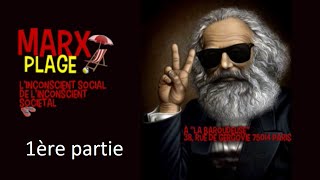 Series · 1 Feb 2016Marx on the Beach 1/2