Summary
Dominique Pagani sees Jean Paul as the great novelist of early German Romanticism. Widely read in Hegel's time, he is forgotten today. He notes that Jean Paul talks with his reader and made the dream a literary genre a generation before Nerval1. He often returns to an episode in Siebenkäs: after a few minutes' walk, the hero finds himself on foreign soil, which shows how fragmented Germany was23. In a session on Schumann, he gives a close reading of the dawn departure in Siebenkäs. He points out bodily sensations, notations he calls cinematic before the fact, the crescendo of the sunrise and the shift from panorama to miniature. He also comments on "Walt's Dream" in the Flegeljahre, where every turn is driven by sound events4. He stresses Jean Paul's humour. The humour of the Walt-Vult double might explain why he died neither mad nor by suicide. He also considers him the most likely author of the Nightwatches.
- 1#9 Romantic irony and the Vinteuil sonata15 Jan 2021 · 9:17
- 2Hegel on the Beach 2/51 Feb 2016 · 3:16
- 3Napoleon, or the reasons of cunning2 Dec 2024 · 19:29
- 4#9 Romantic irony and the Vinteuil sonata15 Jan 2021 · 20:21
Summary produced automatically from 17 of the passages below, to be reviewed; the numbers link to the moment in the session.
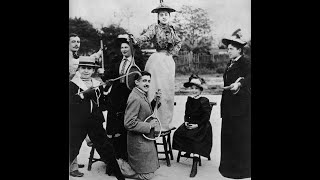 Series · 15 Jan 2021#9 Romantic irony and the Vinteuil sonata
- 9:17Flegeljahre (The Awkward Age)Summit of the prose of early German romanticism, he integrates the dream as a literary genre a generation before Nerval.
- 12:28The humor of the Walt-Vult double perhaps explains why he died neither mad nor by suicide.
- 20:21Flegeljahre (The Awkward Age)Commented reading of "Walt's Dream," all of whose articulations are governed by sonic events.
- 35:31Whose real name was Richter, he takes the name Jean-Paul in homage to Rousseau and remains one of the few German romantics to use humor.
 Cycle 5.2 · 2 May 2019#5.6 Nature or landscape?
- 32:10Passage listed.
- 36:39The novelist most read in Hegel's time and forgotten today; he converses with his reader and made dream a literary genre.
- 43:25SiebenkäsThe departure at dawn: bodily sensations and cinematic notations avant la lettre.
- 46:45SiebenkäsCrescendo of the sunrise and hymn to spring; shift from panorama to miniature.
- 55:03SiebenkäsThe ranz des vaches awakens the hero's childhood, which speaks to him: the emotion breaks the joyful march.
- 1:19:53SiebenkäsThe farm landscape is a managed nature, full of humor.
 Series · 20 May 2022Who is hiding beneath the surfaces? Aesthetics and politics
- 33:58In one of his novels, the hero, after a quarter of an hour's walk, passes into another state, a sign of German fragmentation.
 Series · 1 Feb 2016Hegel on the Beach 2/5
- 3:16Great novelist of German romanticism; one of his heroes enters foreign territory after five minutes' walk, a sign of Germany's fragmentation.
 Talks · 2 Dec 2024Napoleon, or the reasons of cunning
- 19:32SiebenkäsHis hero arrives in a foreign land after just a few kilometers: fragmented Germany.
 Cycle 11 · 18 Mar 2023A springtime of the peoples?
- 45:55The novel of early Romanticism.
 Series · 3 Dec 2020#1 Schubert and the master singers
- 6:39Possible allusion behind the symphony's nickname, The Spring.
 Cycle 6 · 29 Mar 2020#6.6 The logic of the subject in the face of the reconstitution of Nazism
- 1:07:52The most likely author of the Nights according to him; a novelist full of humor, now forgotten.
 Series · 23 Mar 2020Introduction to the upcoming workshops
- 13:04Before Nerval, he had already integrated dream as literary material.
 Cycle 4 · 15 Jan 2018#4.4 Angélique (by Nerval)
- 57:53Another German Romantic gifted with humor.
 Talks · 19 Jun 2016At the bistro (part 2)
- 15:47A star at the beginning of German romanticism.
- 32:50Wrote his novels in 1795, during Mozart's lifetime.
