Dominique Pagani gives a close reading of An Imperial Message, to which he devotes a session in 2019. The dying emperor's messenger never arrives, but the one who awaits the message in the evening establishes a connection: he sees in this a negative theology1. He often returns to The Castle. There the land surveyor K. shuttles between the village and the castle of Count Westwest, "the West of the West", a figure of inaccessible transcendence that shows itself only through a bell and the telephone crackle of distant children's voices2. From this he draws the importance of sound for a writer who shuns music out of excessive sensitivity3. The Burrow serves him as an image of the self, never better protected than when it is contemplated from outside4. He links Kafka to Nerval through the relationship with the father, arrest and trial, minus the humour. He makes him a figure of modern anguish and guilt. He criticises liberal-libertarian thought for turning him into an anti-totalitarian, whereas in Kafka it is always the guilty one who speaks5.
Summary produced automatically from 80 of the passages below, to be reviewed; the numbers link to the moment in the session.
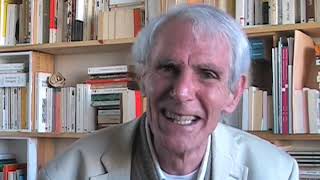
Who is this?
Franz Kafka (3 July 1883 – 3 June 1924) was a German-language Jewish Czech writer and novelist born in Prague, the capital of the Bohemia, in the Austro-Hungarian Empire. Widely regarded as a major figure of 20th-century literature, his works fuse elements of realism and the fantastique, and typically feature isolated protagonists facing bizarre or surreal predicaments and incomprehensible bureaucratic powers. The term Kafkaesque has entered the lexicon to describe situations like those depicted in his writings. […]
2:53An immense artist of writing who denounces only himself; he says he does not like music because it makes such an impression on him that he feels it as a threat.
7:35The CastleSummary of the novel: the land-surveyor tries in vain to reach the castle, a figure of the absolute, and shuttles between castle and village.
11:44The CastleReading of the crackling on the telephone: distant children's voices form a single voice, both attracting and threatening, the voice of God.
15:51The CastleFar from ruling over the absurd, Kafka makes his hero the land-surveyor, the one who establishes measure.
22:33The CastleReading of the bell with its winged and painful sound, which threatens to fulfill what the heart obscurely wishes.
40:06The BurrowAmong the animal stories; the terrified animal multiplies ruses, decoys and tunnels to secure its underground burrow.
42:19The MetamorphosisHis most famous text, centered on an insect agonizing on its back.
42:43Investigations of a DogA dog wonders in it where food comes from; cited alongside A Report to an Academy.
56:47The BurrowThe animal feels safer contemplating its burrow from outside, split between the one who sleeps and the one who keeps watch.
1:01:49In Our SynagogueThe fearful animal of the synagogue runs along a narrow ledge: back-and-forth between fear and fear, driven by the search for security.
1:48He announces the Kafka text chosen for the session, to which he has already alluded in past workshops.
12:52An Imperial MessageHe reads then analyzes this text taken from "The Great Wall of China": a message that does not reach its destination, and three characters.
19:28The Nearest VillageHe recites this one-sentence short story: the young man does not even reach the neighboring village, a Parmenidean impossibility.
41:49The CastleThe last novel: K. never reaches the castle, which nevertheless manifests itself through the sound of a bell and a telephone crackling.
14:27The CastleThe surveyor K commutes between the village and the castle of Count Westwest, the West of the West, a figure of inaccessible transcendence.
19:41The TrialThe judge one never sees, a figure of transcendence like the castle.
3:25The Great Wall of ChinaCollection of micro-stories from which he retained An Imperial Message.
41:36An Imperial MessageThe dying emperor's messenger will never leave the palace. But the subject who awaits the message in the evening establishes a connection.
7:22The CastleThe owner of the castle, named only once, is Count Westwest.
1:09:05The TrialHe tells the parable of the doorkeeper of the law: the man from the country asks his question too late; the door was made only for him.
23:00The CastleThe castle belongs to Count West, mentioned only once: a figure of the hyper-Westerner, of power that eludes, the mirror image of the Eastern barbarian.
1:44:23In the Penal ColonyThe machine that inscribes the law into the body malfunctions and the torturer dies on it; Jewish Czech writer of German language.
1:02:56The BurrowAn anxious animal builds a labyrinth against predators: this is an image of the ego, protected above all when it contemplates itself from outside.
1:05:52The BurrowLuther's chorale brings The Burrow to mind.
6:18An Imperial MessageThe emperor's dying messenger never arrives at his destination: a text on incommunicability in modernity, taken from The Great Wall of China.

 Series · 7 Apr 2021#1 Mignon, or the song of silence