 Season 12 · 30 May 2024From fidelity to grace - From substance to Subject
Visconti
Appears in 10 videos · 13 passages, 1 of them in depth.
What Dominique Pagani says
Dominique Pagani sees Visconti above all as a "red prince", a communist prince who shows the class struggle within the ruling classes themselves, in The Leopard as in The Damned1. He often comes back to Death in Venice. He points out its link with Wagner, who died in Venice, something Visconti knows2, the scene of the musician who taunts the hotel guests3 and the opening credits that quote Rilke. He sees in him a filmmaker who probed the consciousness of the 1920s without accepting the post-1945 status quo4. In his sessions on music, he connects Visconti to Verdi. Senso opens on a performance of Il Trovatore where partisans of Italian unity shout "Viva Verdi"5, and The Leopard captured well the frenzy of living that belongs to Verdi6. He also mentions Ludwig, the film about Ludwig II. He counts Visconti among the great names of Italian cinema of the time and uses him as a point of comparison when he calls Satyajit Ray an "Indian Visconti".
- 1De la fidélité à la grâce - De la substance au Sujet30 May 2024 · 1:23:34
- 29 #15 Comment des sciences de l'histoire peuvent-elles être réelles?18 Feb 2021 · 29:05
- 3Dominique Pagani : « Ce qui menace les sociétés, ce sont les hommes et femmes bénéficiaires de l’exploitation des autres »12 Mar 2019 · 1:52:23
- 4Musicosophie 8. Bonheur et malheur en musique11 Jan 2021 · 1:55:25
- 59 #18 Le Crépuscule des dieux ou de la répétition à la libération3 Apr 2021 · 27:01
- 6Musicosophie 8. Bonheur et malheur en musique11 Jan 2021 · 33:38
Summary produced automatically from 13 of the passages below, to be reviewed; the numbers link to the moment in the session.
 Who is this?
Luchino Visconti di Modrone, Count of Lonate Pozzolo (Italian:; 2 November 1906 – 17 March 1976) was an Italian filmmaker, theatre and opera director, and screenwriter. He was one of the fathers of cinematic neorealism but later moved towards luxurious, sweeping epic films, dealing with the themes of beauty, decadence, death, and European history, especially the decay of the nobility and the bourgeoisie. Critic Jonathan Jones wrote that "no one did as much to shape Italian cinema as Luchino Visconti.” […]
Read the article on WikipediaText: Wikipédia, CC BY-SA 4.0, excerpt · Portrait: Marisa Rastellini (Mondadori Publisher), Public domain
Season 12 · 30 May 2024From fidelity to grace - From substance to Subject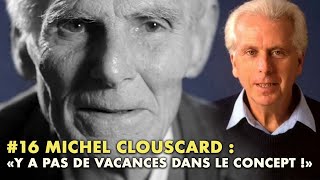 Season 10 · 7 Jul 2022#16 Michel Clouscard: "There are no holidays in the concept!" - Dominique Pagani
- 23:14Cited among the greats of Italian cinema of the era.
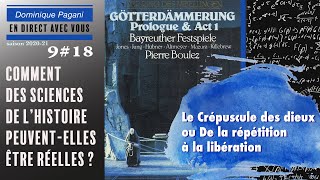 Season 9.2 · 3 Apr 20219 #18 Twilight of the Gods, or from repetition to liberation
- 27:01SensoThe film opens on a performance of Il Trovatore where partisans shout for Italian unity.
 Season 9.2 · 18 Feb 20219 #15 How can sciences of history be real?
- 29:05He knows that Wagner died in Venice.
 Series · 11 Jan 2021Musicosophy 8. Happiness and unhappiness in music
 Season 9.1 · 24 Dec 2020#10 Benefits and harms of amnesia...
- 1:21:12Death in VeniceThe film's opening credits quote Rilke.
 Season 8 · 11 Jun 2020#10 • Return to the logics of the subject
- 56:55Satyajit Ray compared to an "Indian Visconti."
 Series · 12 Mar 2019Dominique Pagani ▷II Pablo Servigne
- 1:52:23Death in VeniceThe scene of the musician mocking the hotel's guests.
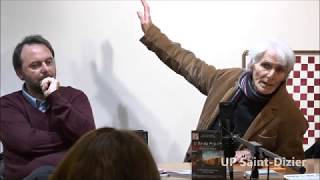 Talks · 20 Jul 2018Education: can the Beautiful be learned?
- 1:04:37Death in VeniceRed prince, filmmaker of Death in Venice and The Damned.
 Talks · 18 Jun 2016At the bistro with Pagani: part 1
- 1:07:16Death in VeniceWagner died in Venice.