 Season 12 · 1 Apr 2024The quest for the Grail, sanctimony or sacrilege?
- 2:05:06The OresteiaOrestes acquitted thanks to Athena, then pursued by the maternal goddesses: perhaps the source of Parsifal's ten years of wandering.
Appears in 25 videos · 30 passages, 5 of them in depth.
Dominique Pagani sees Aeschylus as the most archaic of the three great tragedians. His is a theatre in which the chorus and the collective take precedence over the individual12, and he judges him more epic than Sophocles. He uses The Persians as an example of the "we" of the Greek city: the whole city gathers on the tiers on the evening of the performance34. In Prometheus Bound, he notes that it is Zeus who is made guilty, not Prometheus. He often returns to the prophecy that man will dethrone the gods as Zeus dethroned Cronus5, and he sees in it the first death, a tragic one, of the ancient gods. He links Aeschylus to hubris, the driving force of tragedies, and to Greek tragic death. For him, making mousikè means doing as Aeschylus did, whose tragic text is chanted. From the Oresteia, he retains Orestes' acquittal by Athena and his subsequent pursuit by the maternal goddesses. He sees in this perhaps the source of Parsifal's ten years of wandering6.
Summary produced automatically from 30 of the passages below, to be reviewed; the numbers link to the moment in the session.
 Who is this?
Aeschylus was an ancient Greek tragedian, often described as the father of tragedy. Academic knowledge of the genre begins with his work, and understanding of earlier Greek tragedy is largely based on inferences made from reading his surviving plays. According to Aristotle, he expanded the number of characters in the theatre and allowed conflict among them. Formerly, characters interacted only with the chorus. […]
Read the article on WikipediaText: Wikipédia, CC BY-SA 4.0, excerpt · Portrait: Tilemachos Efthimiadis, CC BY-SA 2.0
Season 12 · 1 Apr 2024The quest for the Grail, sanctimony or sacrilege? Season 11 · 29 Jun 2023Worldliness in Clouscard: Aragon and the positivity of the negative
 Season 9.1 · 13 Nov 2020#4 Benefits and harms of amnesia...
 Season 4 · 12 Apr 2018#4.7 Angélique (by Nerval)
 Season 3 · 1 Aug 2017#3.4 From Ulysses to Daedalus
 Season 13 · 2 Dec 2024Evil, or the "unknowing" of the self
 Season 11 · 12 Dec 2022Hesitation fascinated by hearing and by sight: Siegfried and Perceval
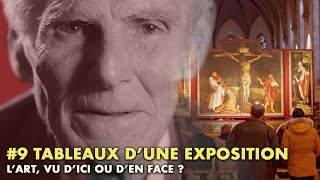 Season 10 · 10 Feb 2022#9 PICTURES AT AN EXHIBITION: Art, seen from here or from the other side?
 Season 10 · 24 Nov 202110#5 The figure of Antigone, such as into herself at last...
 Series · 9 Feb 2021Musicosophy 15. Plato, Rousseau, Hegel and music
 Series · 28 Jan 2021Musicosophy 12. Nietzsche (right up) against Wagner
 Season 9.2 · 7 Jan 20219 #11 How can sciences of history be real?
 Series · 3 Dec 2020Musicosophy 1. Schubert and the master singers
 Season 8 · 30 Jul 2020#16 • Return to the logics of the subject
 Season 8 · 23 Jul 2020#15 • Return to the logics of the subject
 Season 8 · 21 Jun 2020#11 • Return to the logics of the subject
 Season 8 · 11 Jun 2020#10 • Return to the logics of the subject
 Series · 23 Mar 2020Interview with Dominique Pagani: Introduction to the upcoming workshops
 Season 5.2 · 30 Jun 2019#5.8 Nature or Landscape?
 Season 5.1 · 2 Nov 2018#5.1 bis FaceBook Live / Questions
 Season 3 · 1 Aug 2017#3.2 From Ulysses to Daedalus
 Season 2 · 10 Mar 2016#2.4 Between crisis and war: Philosophising?
 Series · 2 Feb 2016Hegel on the Beach 5/5
 Series · 2 Feb 2016Hegel on the Beach 4/5
 Season 1 · 10 Dec 2015#1.4 Between crisis and war: Philosophising?