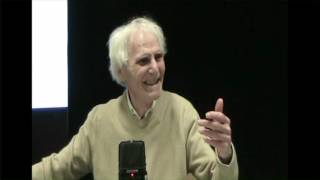
Dominique Pagani places Richard Strauss among the post-Wagnerians and considers him the most popular of them in Germany1. He repeatedly distinguishes him from Johann Strauss, the composer of The Blue Danube and of waltzes, and sees in him a summit of German music23. He describes him as a "post-Wagnerian Handel" of protean vigour4, always swept along by the "philharmonic gust", with operas scored for gigantic orchestras5. He reads Don Juan, Till Eulenspiegel and Ein Heldenleben from the angle of the symphonic poem, and therefore of programme music. In his view, the programme in these works is not binding: it gives a general tone or a literary idea so that the music does not get lost in the indefinite6. He presents Capriccio as a pocket opera that raises the question of whether words or music should come first. He sees Parsifal as foreshadowing Strauss's most expressionist works, such as Salome. He also notes that after the war Strauss was rejected, like Bruckner and Mahler. Finally, he mentions Ariadne auf Naxos in connection with the Cretan cycle.
Summary produced automatically from 14 of the passages below, to be reviewed; the numbers link to the moment in the session.
Who is this?
Richard Georg Strauss (; German: ; 11 June 1864 – 8 September 1949) was a German composer and conductor known for his tone poems and operas. He was a leading figure of the late Romantic and early Modern era. His first tone poem to achieve wide acclaim was Don Juan. This was followed by other lauded works of this kind, including Death and Transfiguration, Till Eulenspiegel's Merry Pranks, Also sprach Zarathustra, Don Quixote, Ein Heldenleben, Symphonia Domestica, and An Alpine Symphony. His first opera to achieve international fame was Salome. […]

 Series · 10 Mar 2021#16 Programme music, pure music