Counter-revolution
5 videos, newest first.
What Dominique Pagani says
Dominique Pagani places counter-revolution within a long chronology. He stresses that it lasts longer than revolution, from Thermidor to the Restoration as from 1789 to 1917, and he proposes calling the nineteenth century the "century of revolutions"12. He connects it to the shift from the Enlightenment's happiness to the mal du siècle, which he reads in Nerval3. He dates a new phase to the 1960s and 1970s: this counter-revolution "de-Marxises" the intellectual field and targets the "cursed triangle" formed by humanism, universalism and progressivism, targets he already finds in Baeumler4. Following Clouscard, he identifies it with the neo-Kantianism shared by Lévi-Strauss, Heidegger and Foucault, and he sets Plato, the philosopher of revolution, against it1. He holds that this old way of thinking, descended from Maistre, presents itself as new, for instance in Soler's critique of monotheism. In his view it has surged since Marxism lost power, and he compares the alternation of revolution and counter-revolution to that of neo-classicism and neo-romanticism2. He also distinguishes Nietzsche from the use the "hyper-Nietzschean" counter-revolution makes of him5.
- 1Dominique Pagani sur Michel Clouscard - Les chemins de la praxis 1/28 Dec 2015
- 2#3.3 D'Ulysse à Dédale1 Aug 2017
- 3L'interview de Dominique Pagani : Introduction aux futurs ateliers23 Mar 2020
- 4Dominique Pagani ▷II Michel Foucault2 May 2019
- 5Nietzsche ou le Grand Nigaud - Lectures sur le vif7 Feb 2023
Introduction produced automatically from the 5 sessions on this theme, to be reviewed; the numbers link to the sessions.
The 5 videos
 Readings on the spot
Nietzsche, or the Great Ninny - Readings on the Spot
7 Feb 2023What do two paragraphs of Nietzsche's Beyond Good and Evil reveal about the music to come and the German soul?
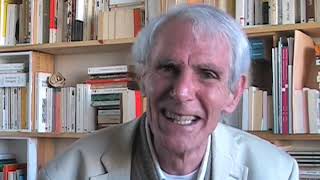 Introduction to the workshops
Interview with Dominique Pagani: Introduction to the upcoming workshops
23 Mar 2020What does Angélique de Nerval, reread in light of the Odyssey and the structure of the double carnage, teach us about the passage from Enlightenment happiness to the mal du siècle and about today's illusions?
 Play ▷II Pause
Dominique Pagani ▷II Michel Foucault
2 May 2019What is the value of Michel Foucault's project, in his 1966 interview, of an ethnology of our own knowledge that announces the end of philosophy and the death of man?
 Season 3
#3.3 From Ulysses to Daedalus
1 Aug 2017How can we assume the contradiction between the Greek and Christian heritages without falling back into the old counter-revolutionary thought that presents itself as new?
 On Michel Clouscard
Dominique Pagani on Michel Clouscard - The paths of praxis 1/2
8 Dec 2015How should we read Michel Clouscard's Les Chemins de la praxis, and why does this book oppose Heidegger, philosopher of the counter-revolution, to Plato, philosopher of the revolution?