Summary
Dominique Pagani approaches eighteenth-century libertinism as a pursuit of pleasure, in a century he describes as thirsting for happiness. He links it to Laclos, Sade, Fragonard and Da Ponte. In Così fan tutte, he points out that the farewell quintet, pure pretence, nonetheless carries Mozart's most deeply moving music1. Through Valmont's letter about Madame de Tourvel, he shows that the libertine calculates the gap to be crossed and seeks out obstacles and duration: for him, it takes time to reach pleasure2. He sets against this lesson the cherry idyll of the Confessions, which stays at the edge of libertinism and takes Rousseau from pleasure to happiness2. He also places the happiness of the fifth walk beyond the pleasures of aristocratic libertinism3. Finally, he analyses libertine pleasure as a privilege of power, which Rousseau's triangle and the character of Susanna open up to the happiness of the popular masses4.
- 1Polymorphously perverse Mozart1 Jun 2022
- 2From the debauchery of sense to the orgy of sentiment29 May 2023
- 3#1 Benefits and harms of amnesia…8 Oct 2020
- 4#13 Mozart restored2 Feb 2021
Introduction produced automatically from the 4 sessions on this theme, to be reviewed; the numbers link to the sessions.
The 4 videos
 dominique bintou
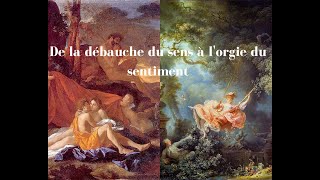
From the debauchery of sense to the orgy of sentiment
29 May 2023How does modernity shift the balance between pleasure and happiness, and what place do worldliness, code and artifice hold in it?
 Pagani Parle Musique
Polymorphously perverse Mozart
1 Jun 2022How does Mozart's music unite libertinism and generosity, comedy and true emotion, gaiety and melancholy?
 Musicosophie
#13 Mozart restored
2 Feb 2021What does Mozart's music say about happiness, and how does this happiness express the historical turning point of the late eighteenth century?
 Cycle 9.1
#1 Benefits and harms of amnesia…
8 Oct 2020Is memory the condition of happiness and identity, or is forgetting its condition instead?