 Cycle 11 · 3 Sept 2023Worldliness in Clouscard: desiring what? Through whom?
- 32:06Enjoyment may be of infinite intensity but it is fleeting, gone as soon as it appears.
Worked through in 12 videos · 17 passages.
Dominique Pagani refuses to say anything against pleasure: happiness cannot be reduced to it, but it does not exist without it1. He describes pleasure as intense, sometimes infinitely so, but fleeting. Enjoyment vanishes almost as soon as it appears, and it is all the more intense when the path to it has been long. Wanting it to last already means being for happiness, which is one more demand and not puritanism23. He connects the question of pleasure to that of class: for a long time pleasure was reserved for an elite, and libertinism was the prerogative of the feudal lords. Rousseau is not against pleasure but against pleasure as a class privilege4. The Republic grants the right to obtain any pleasure that harms no one, and the right to enjoyment is a first step toward the right to happiness56. He adds that exclusive pleasures are the death of pleasure. Finally, aesthetic pleasure, which is disinterested, keeps art alive and brings back to the surface the ends of our desires.
Summary produced automatically from 17 of the passages below, to be reviewed; the numbers link to the moment in the session.
Cycle 11 · 3 Sept 2023Worldliness in Clouscard: desiring what? Through whom?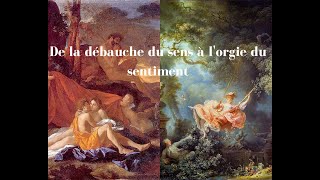 Talks · 29 May 2023From the debauchery of sense to the orgy of sentiment
 Cycle 11 · 18 May 2023Worldliness in Clouscard, or privileges for all
 Cycle 11 · 26 Apr 2023Worldliness in Clouscard, or “the dominant ideology”
 Cycle 9.2 · 18 Feb 2021#9.15 How can sciences of history be real?
 Series · 7 Feb 2021#14 Mozart once more
 Series · 11 Jan 2021#8 Happiness and unhappiness in music
 Series · 11 Dec 2020#5 Happiness versus the death drive in music
 Cycle 5.2 · 30 Jun 2019#5.8 Nature or landscape?
 Talks · 19 May 2018The clash of cultures: K. Souleymane (Niger)
 Cycle 1 · 10 Dec 2015#1.4 Between crisis and war: philosophising?
 Series · 23 Dec 2014I for Island