Russian Revolution
3 videos, newest first.
What Dominique Pagani says
Dominique Pagani approaches the Russian Revolution through the figure of Lenin rather than through an account of events. He says he belongs to a sequence that runs from Rousseau to Lenin. From Lenin he takes the testament, in which Lenin wanted to sideline Stalin and Trotsky, and the Philosophical Notebooks, which show a reader transformed by Hegel's Logic1. He returns several times to the judgment Lenin, then in exile in Switzerland, passed on the absolute idea: for Lenin it is at once the most idealist and the most materialist passage in Hegel23. He also comments on "What Is to Be Done?": the project of the newspaper Iskra, the spark meant to fan the blaze, its educational role for activists across Russia, and the ironic praise of dreaming that Lenin borrows from Pisarev2. From this he draws a reflection on the place of the subject and of purpose in history. Against the neo-positivism dominant since the fall of the Berlin Wall, he holds that dreaming does no harm if the dreamer works to make the dream real2.
- 1Au bistrot avec Pagani : partie 219 Jun 2016
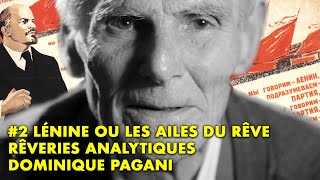
- 2#2 Lénine ou les ailes du rêve18 Apr 2021
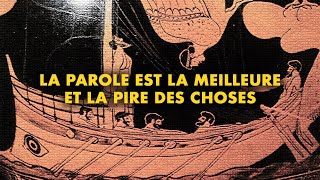
- 3"La parole est la meilleure et la pire des choses" (Esope)19 Oct 2022
Introduction produced automatically from the 3 sessions on this theme, to be reviewed; the numbers link to the sessions.
The 3 videos
 Season 11
"Speech is the best and the worst of things" (Aesop)
19 Oct 2022In what sense is speech "the best and the worst of things," and how does this contradiction reappear in Hegel's Greater Logic and in the relation between philosophy and history?
 Analytical Reveries
#2 Lenin, or the wings of dreams
18 Apr 2021Under what condition can a revolutionary dream, and what does this dream teach us about the place of the subject and of finality in history?
 Other videos
At the bistro with Pagani: part 2
19 Jun 2016How does Rousseau open the sequence that runs to Lenin, and what becomes of this legacy in Nerval, the romantics, Clouscard and Nietzsche?