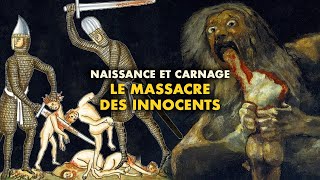
 Cycle 12 · 22 Dec 2023Birth and carnage: the Massacre of the Innocents
Security
Worked through in 4 videos · 8 passages.
Summary
Dominique Pagani refuses to treat security as a reactionary or bourgeois term. He regards it as a vital moment, "the first of freedoms", like the gazelle, whose flight from danger is already a freedom12. He draws a political consequence from this: the demand for social justice is a demand for security extended to the whole social body, not reserved for a handful of privileged people3. He also marks its limit. Drawing on Kafka's The Burrow, he shows that an excess of security is deadly, since by staying under shelter one starves. He adds that security remains an image pursued without ever being reached: the animal feels safer when it looks at its burrow from the outside45. In 2023, he places security on the side of determination and adds that the only complete security is death. The French Revolution, by contrast, accepted insecurity in order to gain freedom, by casting off the fear of death67.
- 1#15 Nietzsche: philosophical or musical relevance? Answers to questions23 Jun 2022 · 22:58
- 2Security: is it conservatism or Revolution?12 Jul 2022 · 3:09
- 3Security: is it conservatism or Revolution?12 Jul 2022 · 8:20
- 4#12 From Kafka to Proust, the dialectical passage from the intermezzo to the perpetuated edge7 Apr 2022 · 45:38
- 5#12 From Kafka to Proust, the dialectical passage from the intermezzo to the perpetuated edge7 Apr 2022 · 1:00:44
- 6Birth and carnage: the Massacre of the Innocents22 Dec 2023 · 49:01
- 7Birth and carnage: the Massacre of the Innocents22 Dec 2023 · 1:07:37
Summary produced automatically from 8 of the passages below, to be reviewed; the numbers link to the moment in the session.
Cycle 12 · 22 Dec 2023Birth and carnage: the Massacre of the Innocents Series · 12 Jul 2022Security: is it conservatism or Revolution?
 Cycle 10 · 23 Jun 2022#15 Nietzsche: philosophical or musical relevance? Answers to questions
 Cycle 10 · 7 Apr 2022#12 From Kafka to Proust, the dialectical passage from the intermezzo to the perpetuated edge