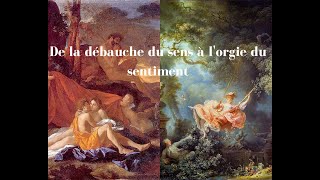
 Talks · 29 May 2023From the debauchery of sense to the orgy of sentiment
Artificial
Worked through in 6 videos · 7 passages.
Summary
Dominique Pagani starts from language, which opposes the natural to the artificial. Yet "artistic" and "artificial" share the word "art", which makes the very idea of natural beauty problematic1. He links art to the Greek technè: the Greeks did not separate art from technique. From this perspective, the wheat field and the Romanesque chapel are equally artificial, because they are products of technè. He concludes that the human world is artifice, not nature. He therefore proposes to distinguish natural matter from historical matter2. He finds this idea in Baudelaire, whose artificialism he presents by recalling that art, artifice and artisan share the same root3. In Baudelaire, fashion is an attempt to reform nature, and art accomplishes what nature cannot complete4. Against an indifferent nature that reclaims the ground of art, he adds that the thirst for knowledge remains the driving force of all activity5.
- 1Education: can beauty be learned?20 Jul 2018 · 9:05
- 2#9.14 How can sciences of history be real?5 Feb 2021 · 1:41:28
- 3From the debauchery of sense to the orgy of sentiment29 May 2023 · 2:15:43
- 4From the debauchery of sense to the orgy of sentiment29 May 2023 · 2:30:00
- 5#9.24 “Ruled like music paper!” Nerval, Baudelaire (part 2)30 Jun 2021 · 1:14:56
Summary produced automatically from 7 of the passages below, to be reviewed; the numbers link to the moment in the session.
Talks · 29 May 2023From the debauchery of sense to the orgy of sentiment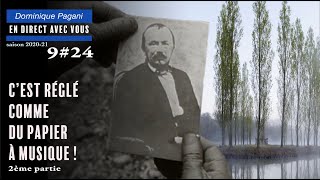 Cycle 9.2 · 30 Jun 2021#9.24 “Ruled like music paper!” Nerval, Baudelaire (part 2)
- 1:14:56Against indifferent nature reclaiming the ground of art, the thirst for knowledge remains eternal, the driving force of all activity.
 Cycle 9.2 · 5 Feb 2021#9.14 How can sciences of history be real?
- 1:41:28The human world is artifice, technè: neither the wheat field nor the Romanesque chapel is nature. One must speak of natural matter and historical matter.
 Cycle 5.2 · 30 Jun 2019#5.8 Nature or landscape?
- 7:17The wheat field and the Romanesque chapel are artificial, products of art in the Greek sense of techne.
 Cycle 5.2 · 26 May 2019#5.7 Nature or landscape?
- 29:18Langue opposes the natural to the artificial; art translates the Greek technè, which the Greeks did not oppose to technique.
 Talks · 20 Jul 2018Education: can beauty be learned?
- 9:05In language, natural is opposed to artificial; artistic and artificial both contain "art": speaking of natural beauty thus becomes problematic.